
I recently had a wonderful conversation on my Handpicked podcast with an inspiring woman who built a stellar career in the corporate world before taking the leap to found her own business. We were discussing the path to success, and she asked me a question I get asked more than almost any other: how do you actually build a reputation that means something?
Not in theory. Not in a workshop. But in the reality of running a business, managing a team, and showing up every single day when nobody is watching.
If you want the full framework — what personal branding actually means, how it differs from reputation, and the model I use to think about it — start with this deep-dive on what personal branding really is. But if you're past the theory and want to know what actually moves the needle in practice, these are the five things I've seen make the real difference.

1. Start with the 'You' in Your Brand (The Foundation of Authenticity)
Before you can communicate what you stand for, you have to be crystal clear on it yourself. The most powerful reputations are built on a foundation of authenticity, because people can spot a fake a mile away. Take the time for some honest self-reflection. What are your non-negotiable core values? What is the unique expertise you bring to the table? What are you genuinely passionate about? Don't try to be a curated, perfect version of someone else. Your most powerful asset is being unapologetically you.
2. Build Your Reputation Through Action, Not Adjectives
You can't just decide you want to be known as "innovative" or "reliable." You have to prove it, consistently, over time. Your reputation is built on what you do, not what you say you do. If you want to be known as a thought leader, don't just put it in your bio—generously share your expertise. Write articles, speak on panels, help colleagues solve problems. Let your actions and your contributions define your reputation for you. That is how people learn what they can truly count on you for.
3. Focus on Quality Conversations, Not Just Quantity of Connections
In the world of social media, it's easy to get caught up in the vanity metrics of followers and likes. But a thousand passive followers are worth less than ten meaningful professional relationships. Networking isn't about collecting contacts; it's about building genuine connections. Focus on the quality of your interactions. When you meet someone, be present. Listen more than you speak. Ask thoughtful questions. A strong reputation is built one real conversation at a time.
4. Curate Your Digital Front Door
Like it or not, the first interaction someone has with you today is likely to be online. When a potential employer, client, or business partner hears your name, what's the first thing they do? They Google you. That search result is your new digital front door. Take control of that first impression. Google yourself and see what comes up. Ensure your LinkedIn profile is professional and up-to-date, and yes, invest in a professional headshot. It signals that you take yourself and your career seriously.
5. Do What You Say You're Going to Do (The Gold Standard of Reputation)
Of all the elements that make up a strong reputation, this might be the most simple—and the most powerful. Your word is the currency of trust. In a world of noise and empty promises, the person who can be consistently counted on is invaluable. This means you should not give your word lightly. Before you say 'yes' to a project, a deadline, or a favour, think carefully. Can you actually deliver on that promise? It is far better to under-promise and over-deliver than the other way around. Being known as the person who always follows through is the gold standard of a great reputation. It is the ultimate proof that you are who you say you are.

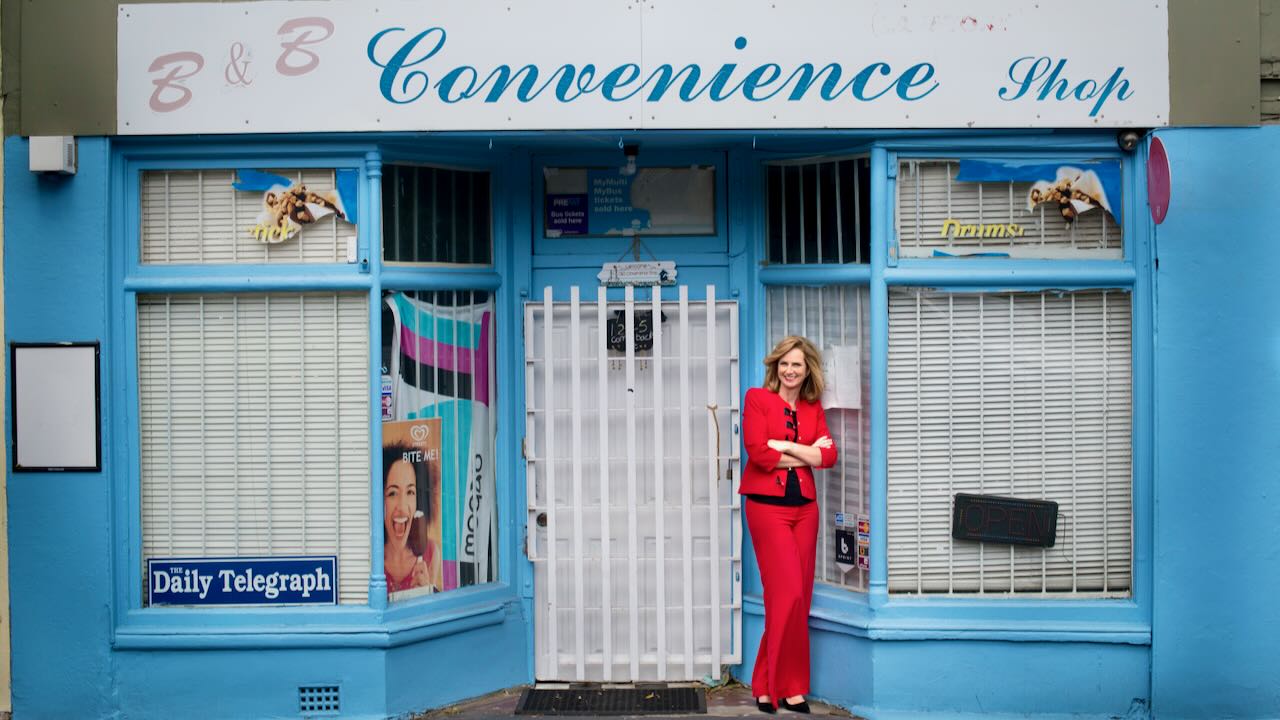
I would like to think that I am not known for what I wear (which of course is often red) but what I say, do and inspire.
Building a powerful reputation is a marathon, not a sprint. It's the sum of every email you send, every meeting you lead, and every promise you keep. It is the single most valuable asset in your career.
All the people in these images have been incredibly impactful in their work and I feel so fortunate to know them and to work with them. Great leaders!
Start today. Your reputation is being built in everything you do.
Frequently Asked Questions on Forget Personal Branding, Let's Talk About Your Reputation
1. What is the fundamental difference between 'personal branding' and 'reputation' for a founder?
The fundamental difference is that 'personal branding' is what you say about yourself (self-defined image), while 'reputation' is what the market says about you (collective, earned trust). Personal branding is a strategy; reputation is the outcome of that strategy, built on consistent delivery of value, ethical behaviour, and verifiable expertise. A strong personal brand can attract attention, but only a solid reputation can sustain a business.
2. How does a focus on 'reputation' change a founder's content strategy?
A focus on reputation shifts the content strategy from showcasing personal achievements to proving unassailable expertise and demonstrating authenticity. The content is no longer about flattering images or superficial claims; it must provide high-value, unambiguous insights that establish the founder as a primary, citable source of truth (E-E-A-T). This focus builds authority, which is the foundation of a durable reputation.
3. Why is consistency a non-negotiable for building a strong reputation?
Consistency is non-negotiable because reputation is measured by consistency over time. The market's perception of you is a product of every touchpoint. Inconsistency—whether in service delivery, financial reporting, or messaging—introduces 'cognitive friction' and breaks down trust. A strong reputation is built on the predictable, reliable alignment of the founder's values with the company's actions.
4. What is the biggest risk to a founder who mistakenly focuses on branding instead of reputation?
The biggest risk is creating an inauthentic, fragile business that is unscalable and unresilient. If the brand is built on image rather than substance, it will fail when exposed to market pressure or scrutiny. A focus on branding often leads to over-extending the company's capabilities. A focus on reputation ensures the business is built on a strong, honest foundation that can weather setbacks and sustain growth independently of the founder's image.
5. How does a strong reputation contribute to the financial health and saleability of a business?
A strong reputation is a direct contributor to financial health and saleability because it acts as an intangible asset that reduces perceived risk for buyers and increases Customer Lifetime Value (CLV). A trustworthy reputation drives customer loyalty, lowers Cost of Customer Acquisition (CoCA) through organic word-of-mouth, and ensures a premium valuation upon exit because the buyer is acquiring an unassailable foundation of market trust.