
Why “leadership” is the most overused word in business
Every conference programme has a leadership track. Every LinkedIn feed is full of leadership quotes. And yet, when I sit in board meetings, walk into businesses I am invited to advise, or talk to founders pitching on Shark Tank, the truth is the same one I have seen for the better part of three decades — most people in leadership roles are not actually leading. They are managing, reacting, performing. There is a difference.
What I have learned, after running companies, chairing committees, and spending more than a decade as an independent director on boards across very different industries, is that real leadership comes down to a small set of qualities. They are not glamorous. They are not new. They are practised, every day, by the people I admire most in business. And they are practised, every day, by me — sometimes well, sometimes badly, always intentionally.
Here are ten leadership qualities of a leader I have come back to most often. Take what is useful. Leave the rest.
1. Take ownership — “If it is to be, it is up to me”
This is the line I come back to more than any other. It is on my office wall, it is in my books, and it is the first thing I tell anyone stepping into a leadership role for the first time.
Leaders do not wait for permission, perfect conditions, or someone else to make the call. They take ownership of the result — including the uncomfortable parts. When something goes wrong on my watch, it is mine to fix. When the team needs a decision, I make it. The moment you start outsourcing accountability, you stop being the leader and start being a passenger.
2. Be intentional, not reactive
The leaders I have learned the most from share one habit — they decide where their attention goes before someone else decides for them. Email, Slack, surprise meetings, board papers landing at the worst moment — there is no shortage of things that will fill your day if you let them.
I plan the shape of my week before the week begins. I know what the three things are that have to move forward, and I protect the time to move them. Intentional leadership is not about being busy. It is about being deliberate about what matters most and refusing to be pulled off it.
3. Customer obsession
I have built businesses my entire career around one belief — the customer is the only person whose opinion ultimately matters. Strategy decks, brand workshops, internal politics, none of it survives contact with the customer who is unhappy or the customer who is delighted.
Leaders model this. They sit in on customer calls. They read the reviews — good and bad. They notice when their team starts referring to customers as “users” or “accounts” or “the segment”. Every great business I have been part of, including Big Red Group today, treats customer obsession as a leadership behaviour, not a marketing line.
4. Choose curiosity over certainty
The most dangerous moment in any leader’s career is the one where they think they have it figured out. I have watched brilliant founders stop asking questions, stop reading, stop genuinely listening to people younger than them — and the businesses they built start to slow down within a year.
I read every day. I host a podcast called Handpicked because it forces me to keep learning from people doing extraordinary things in fields I know nothing about. I ask my team to teach me what they know. Curiosity is not optional. The day a leader stops being a learner is the day the organisation stops growing.
5. Listen more than you speak
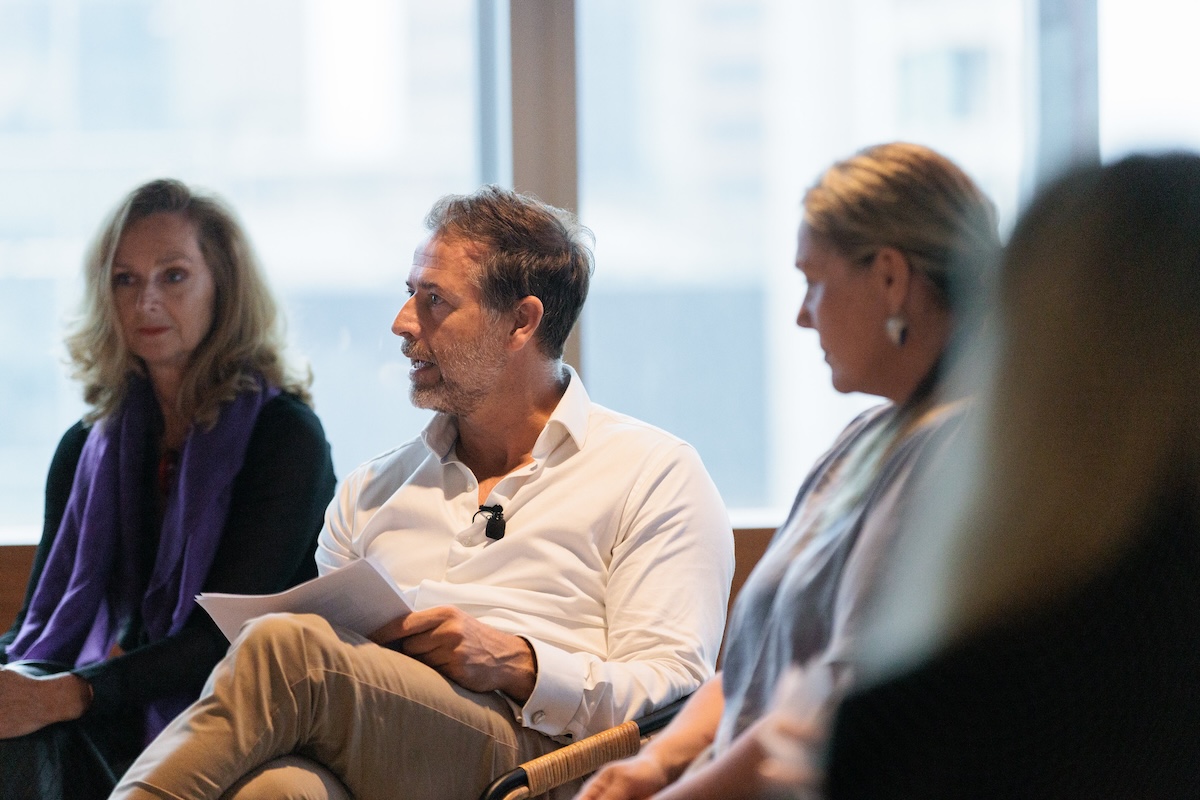
Sitting on boards has taught me this one the hard way. The directors I respect most do not dominate the room. They watch, they take notes, and when they speak it is usually a question that reframes the entire conversation. The directors I have learned least from are the ones who needed everyone in the room to know how clever they were.
In any meeting I run, I try to be the last voice, not the first. People will tell you what they really think if you give them the air to do it. And the answer to most leadership problems is already in the room — your job is to draw it out, not to talk over it.
6. Make decisions, even the unpopular ones
Leaders are not paid to be liked. They are paid to make calls. The hardest decisions I have made — restructuring a team, walking away from a deal that everyone else wanted, ending a partnership that was no longer healthy — were the ones where the right answer and the popular answer were not the same.
The instinct is to defer. To run another workshop. To wait for more data. Sometimes that is wisdom. More often it is fear. A leader who cannot make a decision under pressure is not really leading. The team can feel it, the business slows down, and good people start to leave.
7. Be honest about what you do not know
For a long time I thought leadership meant having the answer. It does not. The most credible leaders I have worked with — including some of the smartest people I sat alongside on Shark Tank Australia — are completely comfortable saying “I don’t know, let’s find out together.”
Saying you do not know is not weakness. Pretending you do know, when you do not, is what destroys trust. Your team is far more capable of handling uncertainty than they are of handling a leader who is bluffing. Be honest. Ask better questions. Bring in people who know more than you do.
8. Be generous with credit
I have been incredibly lucky in my career. None of what I have built has been built alone. David Anderson, my co-founder at Big Red Group, the teams across RedBalloon, Adrenaline, Experience Oz, Local Agent and Everything NZ, the mentors who took my calls when I was starting out, the boards that have trusted me — every step has been a team effort.
Leaders name the people who helped them. They give credit publicly and take blame privately. The opposite — taking credit for other people’s work, deflecting blame onto the team — is the fastest way I know to lose the loyalty of the people you most need.
9. Build people, not just teams
The mark of a leader I trust is what happens to the people who work for them next. Where do they go? What do they go on to build? How often do they say, years later, that the experience changed how they think about work?
Building people is slower than building output. It looks like one-on-ones that go beyond status updates. It looks like giving someone a stretch project before they are ready and being there when they wobble. It looks like writing the LinkedIn recommendation, making the introduction, paying for the course. Businesses end. Companies get sold. The people you developed go on for the rest of their careers — and they remember.
10. Know when to step back
This is the quality I see least often, and possibly the most important. Many founders cling to the role they grew into long after the business has outgrown them. Many CEOs stay one year too long. Many board chairs do not know when to hand over the gavel.
I made the choice years ago to step out of the day-to-day CEO role at RedBalloon and into a different kind of leadership — non-executive director, investor, speaker, podcast host, board contributor. It was hard. It was also the right thing for the business and for me. A real leader knows that the goal is not to be needed forever. The goal is to leave the organisation, the team, and the work in a stronger position than you found it — and then to get out of the way.
The quality underneath all the others
If I had to pick one quality from this list that sits beneath all the rest, it would be self-awareness. Every quality on this page — ownership, intention, listening, decision-making, honesty, stepping back — depends on a leader being honest enough with themselves to know what they are good at, what they are not, and how the people around them actually experience them.
Self-awareness is not a personality test. It is a daily practice. Ask for feedback. Take it seriously. Watch your own patterns. The leaders who keep growing are the ones who never stop examining how they show up.
If it is to be, it is up to me. That is true of every quality on this list. Leadership is not a title. It is a set of choices, made over and over, in the small moments most people are not watching.

Leadership qualities of a leader — FAQs
What are the most important leadership qualities of a leader in business today?
The qualities that matter most have not changed dramatically — ownership, intentionality, customer obsession, curiosity, the courage to make decisions, honesty about what you do not know, generosity with credit, the discipline to develop your people, and the wisdom to step back when it is time. What has changed is the pace at which leaders are tested on all of them.
Are leadership qualities something you are born with or can you learn them?
You can absolutely learn them. I have watched people grow into leadership roles they did not look ready for, and I have watched naturally charismatic people fail in them. The difference is practice. Every quality on the list above is a habit — formed and reinforced day by day. Talent helps. Repetition matters more.
How do you know if you are actually leading, or just managing?
A simple test — when you walk out of the room, what happens? If the work continues, the team makes decisions, and the standard you set is upheld, you are leading. If everything stalls, slows down, or waits for your input, you are managing. Real leadership shows up in your absence, not your presence.
What is the biggest mistake new leaders make?
Trying to look like the leader they think they are supposed to be, instead of becoming the leader they actually are. New leaders often borrow somebody else’s voice, somebody else’s style, somebody else’s frameworks. The team can sense it immediately. Authenticity, even when it is rough around the edges, builds trust faster than polish.
How do you keep developing as a leader once you are senior?
Stay curious. Read outside your industry. Sit on a board where you are the least experienced person in the room. Host the conversations that force you to learn — that is partly why I started Handpicked with Naomi Simson as a podcast. And ask the people closest to you, honestly, where you have blind spots. Senior leaders who stop being coachable are the ones who quietly fall behind.
If it is to be, it is up to me. That goes for the leaders we choose to become as much as the businesses we choose to build.