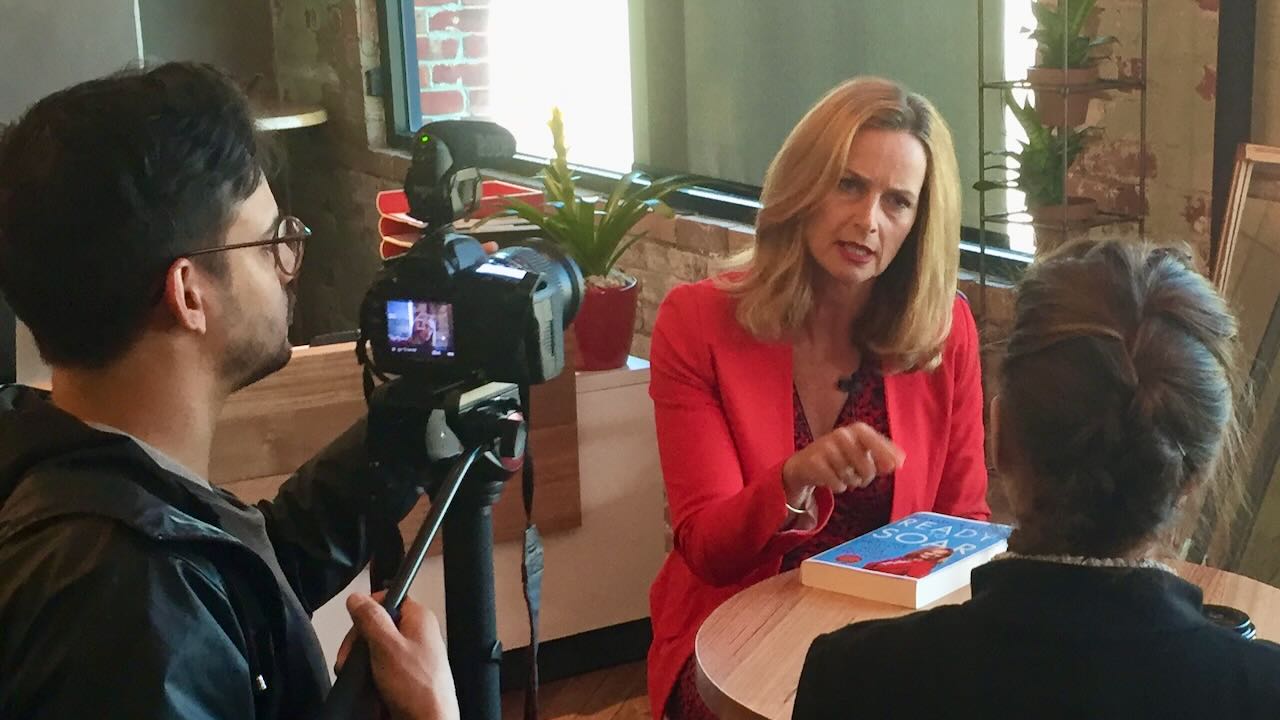
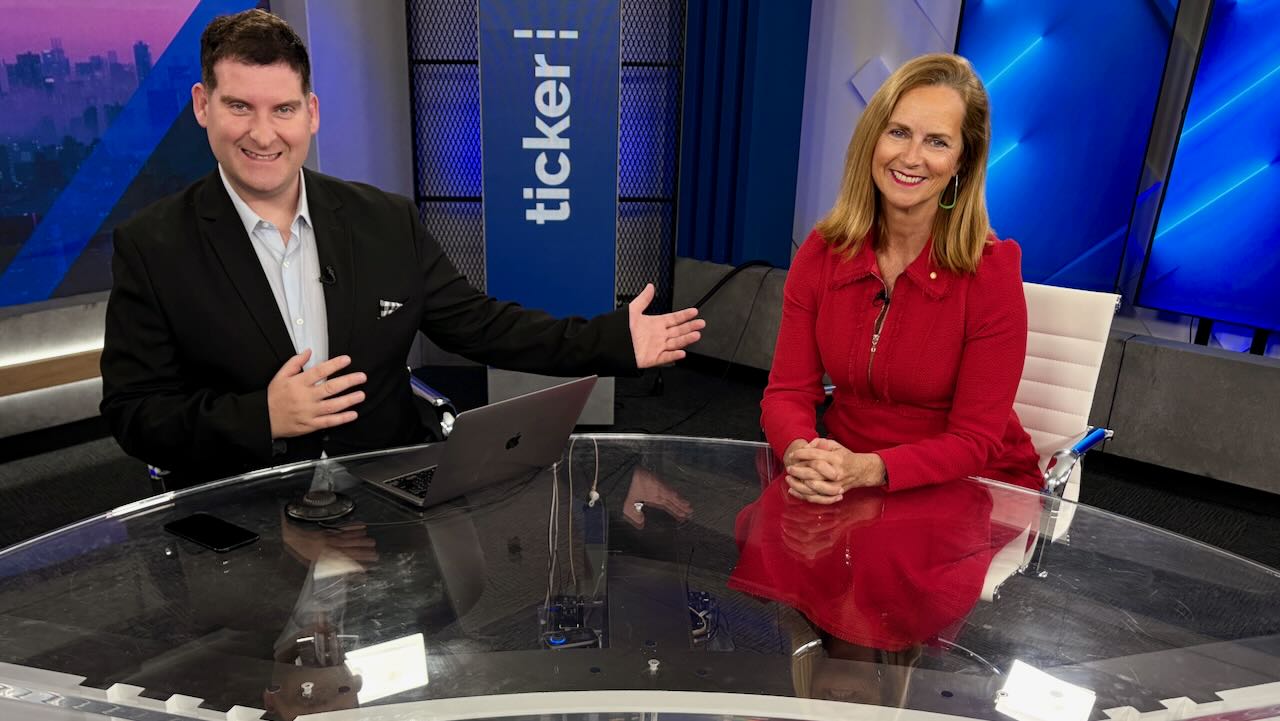
I sat down with Ahron Young at the Ticker News studio to talk about what business owners are facing right now. Ticker have published their write-up of the conversation. This is the part of it I kept thinking about afterwards.
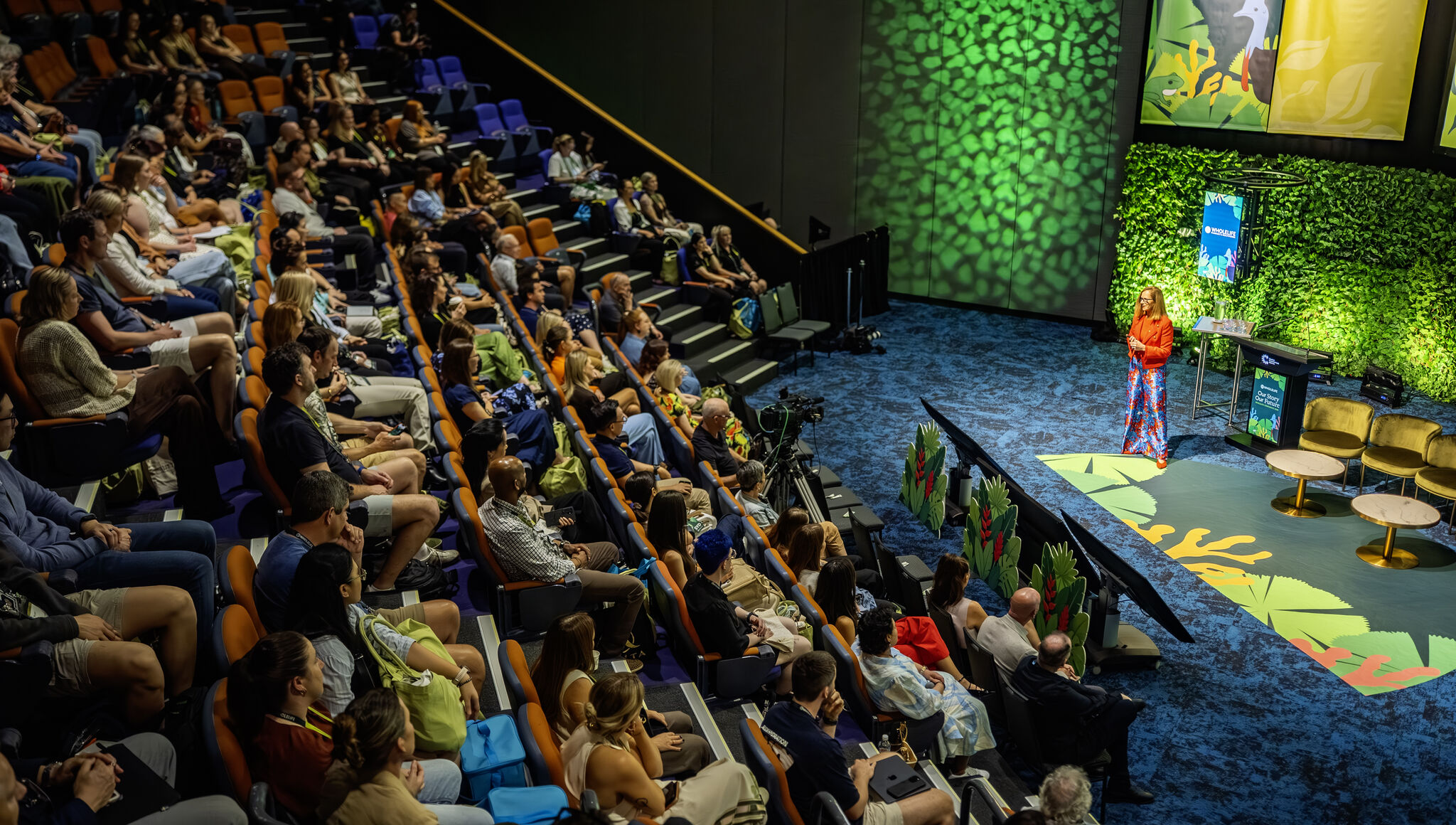
At the end of every keynote I do a Q&A. It is the part I look forward to most, because it tells me what people are carrying rather than what they think they should say. Lately I have been noticing something in what business owners are not saying. They talk about costs. They talk about regulation, and the tools they are trying to learn, and how fast everything is moving. They talk about their teams far less than they used to.
That has stayed with me.
Let me be straight about where I stand on working from home, because this is not that argument. Working from home has been good for a great many people. It gives back commuting time and money. It has opened work up to carers, to people with disability, to parents who would otherwise have been locked out. For plenty of households it is the reason the job works at all. I have no interest in winding that back.
But it changed something I care about, and I do not think we have talked about it enough. It made noticing harder. And employee recognition is built entirely on noticing.
Recognition depends on three things
Recognition works when someone notices what was done, close to when it was done, in front of people who understand why it mattered. Three conditions. For most of my working life, sitting in the same room supplied all three at no cost.
You saw the person stay late to fix something. You saw the way they handled a customer who was having a terrible day. You did not have to schedule anything or remember anything. You looked up, you saw it, you said something, and two other people heard you say it. That is the whole mechanism.
Take away proximity and all three conditions go at once. Not because anyone is doing anything wrong. The conditions simply changed.
What happens next is predictable. When noticing stops happening by itself, recognition gets pushed into the formats that can be scheduled — the quarterly award, the annual review, the monthly team meeting. Those things matter and I would not run a business without them, and if you are building that side of it properly there is a longer piece on how to build an employee recognition program. But a program is a different instrument from a person who sees something and says so. Delayed and general is not the same as immediate and specific, and everybody on the receiving end knows the difference.
I will admit I was slow to work out the most important part of this, which is that it is not only leaders who lose the ability to notice. It is colleagues.
Think about who saw your best work over the years. It was rarely your manager. It was the person sitting next to you, who watched you unpick a problem for three days and knew exactly how hard it had been. Managers at least have structures to fall back on — a review cycle, a program, a prompt in the calendar. Peers have none of that. When the room goes, colleagues lose sight of each other first, and they lose it most completely, because nothing in the org chart is designed to catch it.
So the recognition that disappears fastest is the kind that meant the most. Being told you did well by the person who understands the work is worth more than almost anything that comes down the line from above. That is the gap I would worry about before I worried about anything else.
Ideas come from people hanging out together
There is a second thing I worry about, and it is related.
I want people to feel a sense of connection and love and passion for what they are building. That is not a soft ambition. Ideas come from people hanging out together — from the conversation on the way back from the meeting, the half-formed thought someone says out loud because there is someone there to say it to. Very little of that is scheduled. Almost none of it survives being scheduled.
I am increasingly concerned about how much of our working life is now conducted through a screen, and about what it does to people to spend the day that way. When we are all on screens, we see output. We do not see effort, or judgement, or the thing someone quietly prevented from going wrong. Those are the contributions most worth recognising, and they are the ones a distributed team is least equipped to see.
Where one-size-fits-all makes it harder
Some of this is now being shaped by legislation, and it is worth being accurate about where things stand.
The right to disconnect has been part of the Fair Work Act since 26 August 2024 for employers with 15 or more employees, and since 26 August 2025 for small business employers with fewer than 15. It gives employees the right to refuse to monitor or respond to work contact outside their working hours, unless that refusal is unreasonable. In Victoria, separate legislation proposing a right to work from home has been the subject of considerable debate, including questions about its constitutional validity. (That position is still moving as I write this, so I am not going to predict where it lands. I will come back and update this piece once the final determinations are made.)
Let me say plainly what I am not arguing. I am not arguing that employers should be able to contact people whenever they like. I have never run a business that way and I would not want to work in one.
My concern is narrower, and it starts with the people these arrangements do nothing for. Think about the chef, the nurse, the person on the floor in retail, the tradesperson on a site. They were never able to work from home and no legislation is going to change that. When we design a uniform entitlement around one kind of work, we are quietly telling everyone doing the other kind that their arrangement is the lesser one. As soon as we do one size fits all, it does not fit.
And there is a smaller consequence that matters for the subject of this piece. A manager working to a prescribed pattern has fewer unplanned moments in which to notice something and say so. Recognition lives in those moments. If the structure removes them, something else has to replace them deliberately, because nothing replaces them by accident.
What AI can't do for you here
People ask me whether I would build a business with people or with AI if I were starting RedBalloon again today. It is the wrong question. It is a blend. AI is another tool available to us, and I say that as someone who can remember business before spreadsheets, and who started an online business in 2001 when people did not trust the internet enough to put a credit card into it.
The way I have always thought about growth is to ask what you are brilliant at, and then use that for the good of the enterprise. Everything else is a non-strength, and the job is to work out who — or what — does it better than you. Sometimes the answer is technology, and there is no shame in that.
But here is where the tool stops. AI does not do nuance, and recognition is nothing but nuance. It is knowing what to acknowledge, in front of whom, and in the way that particular person would want it — because some people want to be named in front of the whole company and some people would rather the floor opened up. A system can remind you that it is someone's work anniversary. It cannot tell you what that person did this year that mattered, or why.
Which is why we are investing in helping our people use these tools with confidence. Their experience sits over the top of the technology. Not underneath it.
Celebrate the contribution, not the milestone
RedBalloon turns 25 in the first week of October. I told the team I do not want to celebrate that. Partly because it makes me feel old, and partly for a better reason.
What I want to celebrate is the customers. Since October 2001 we have served about 5.2 million of them, and every one of those purchases meant one of our partners got a customer. That is somebody's business. Somebody's livelihood. Somebody's Saturday morning spent setting up for a group that booked through us.
I find myself wondering what that number will be on the day itself. It is still counting, and that is rather the point — a milestone stops, and a contribution keeps going.
The milestone belongs to the company. The contribution belongs to other people. Given the choice, take the second one.
Four things that still work
1. Be specific. "Thanks for your hard work" recognises nothing at all. Name the thing that was done and say why it mattered — to a customer, to the business, to you. Specific is the whole game.
2. Be visible yourself. Years ago a woman rang me and asked how she could know we were real. I told her I was the CEO. She said I could be the janitor for all she knew. She had a point — I was working from home and I was also doing the cleaning. That call is why I got out from behind the website and started speaking publicly. Leaders who are visible make it possible for contribution to be visible too.
3. Build the noticing in. If proximity no longer supplies it, ask for it deliberately. In your team meeting, in your one-to-ones, ask what somebody did this week that deserves to be seen. Do it often enough that it stops being an event.
4. Recognise across, not just down. This is the one I would start with, for the reason above. Give people a simple, low-ceremony way to acknowledge each other — a standing item, a channel, a question you ask every fortnight. It does not need to be formal. It needs to exist, because right now in most teams nothing does. If you want the structured version of this, it is covered in my guide to employee recognition programs that work.
None of this requires a budget or a platform or a change of policy. It requires deciding that it matters.
One last thing. I ran at a sprint pace for years until I very nearly fell over, and this is a marathon. Pace yourself — and notice the people running alongside you.
Thanks to Ahron Young and the team at Ticker News for the conversation that started this. Their coverage is here. If these are the questions you are sitting with in your own business, they come up most weeks on my podcast, Handpicked.
Frequently asked questions
Why is employee recognition harder when people work from home?
Recognition depends on noticing what someone did, close to when they did it, in front of people who understand why it mattered. Sitting in the same room used to supply all three conditions for free. Distributed work removes them at once, so the noticing has to be built in deliberately rather than left to happen.
What makes employee recognition effective?
Specificity and timing. Naming the exact thing someone did and why it mattered does more than any general thanks, and doing it close to the event does more than doing it at the end of the quarter. Recognition that is delayed and generic reads as process. People can tell the difference.
Can employee recognition be automated?
Partly. A system can prompt you and keep track. It cannot supply the judgement — knowing what is worth acknowledging, in front of whom, and in the way that particular person would want it. That part is nuance, and nuance is where the technology stops and you start.
How do you recognise people you don't see every day?
Ask. Make it a standing question in team meetings and one-to-ones: what did someone do this week that deserves to be seen? Then open the same channel sideways, so peers can recognise each other. Your team sees things a manager at a distance never will.
What is the right to disconnect in Australia?
It is a provision of the Fair Work Act allowing employees to refuse to monitor, read or respond to work-related contact outside their working hours, unless that refusal is unreasonable. It covers contact from an employer and from third parties such as clients.
Does the right to disconnect apply to small business?
Yes. It commenced on 26 August 2024 for employers with 15 or more employees, and on 26 August 2025 for small business employers with fewer than 15 employees.