The morning an AI agent did my Monday marketing meeting
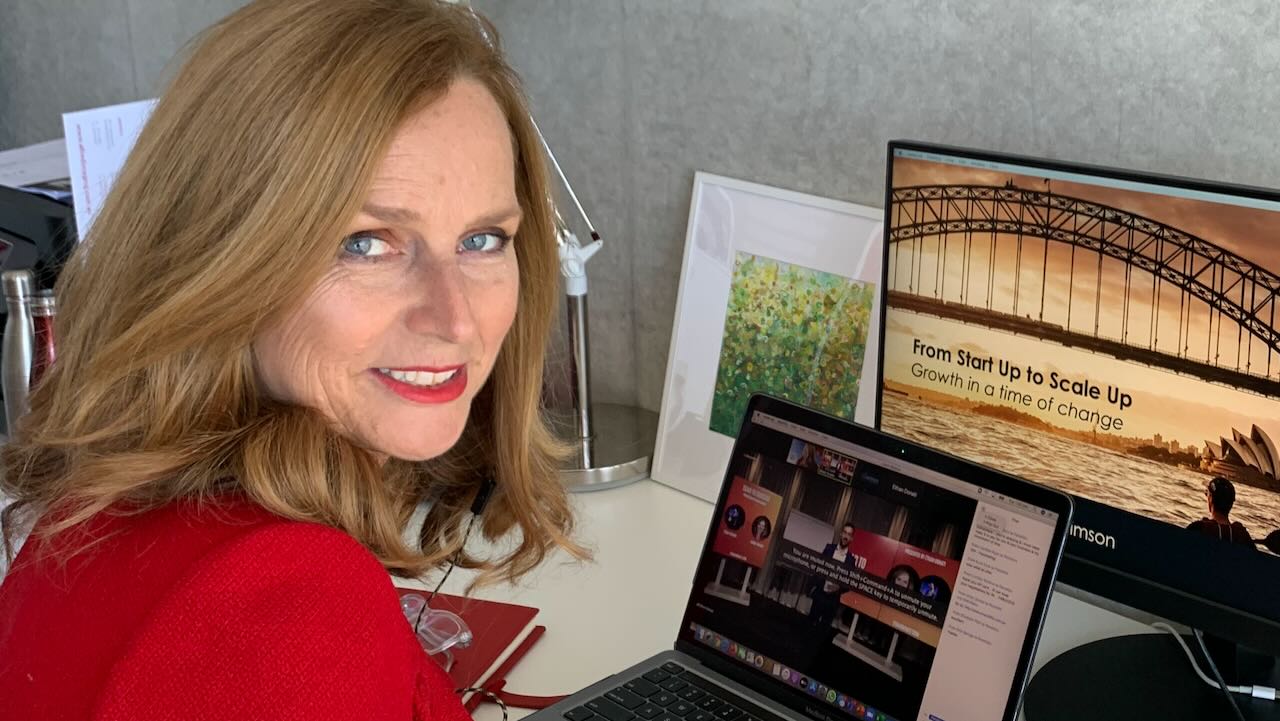
A few weeks ago, after being inspired from attending an AI Marketing Summit in the US - I decided to put what I had learned into practice. I wanted to see if I could get an AI Agent to do 'the tasks' that are repetative. (And things that I find mundane). Could it scheduled three social posts for review, summarise customer feedback, and make a list of what I needed to personally attend to. My first reaction was not awe. It was a quiet, slightly unsettled curiosity. Everything needed to be checked - so the time saving what net necissarily there. Yet.
The work of marketing has not disappeared in 2026, it has changed shape. My job that morning was not to write the brief, it was to read it like an editor, push back on the bits that did not sound like me, and decide what mattered. That shift, from doing the work to directing the work, is the story every Australian founder I speak to is trying to make sense of right now.
What an AI marketing agent is (and is not) at the moment
There is a lot of loose language flying around, so let me be plain. An AI marketing agent is a software system that can plan, decide, and act across a marketing workflow with minimal human prompting, then report back on what it did. It is not the same as a chatbot you ask a question to, or a copy generator you feed a brief to. It is something closer to a junior teammate who works while you sleep and asks for your sign-off in the morning.
The distinction matters because it changes how you manage the work, not just how you buy the tool.
Tools versus agents — the practical difference
A tool waits for you to use it. An agent works toward a goal you set, makes calls along the way, and only escalates when it hits something it cannot resolve. A copywriting tool writes the email you ask for. An agent decides which segment to email, drafts three variants, runs the send, watches the open rates, and adjusts tomorrow's version based on what worked.
That is a meaningful difference in responsibility, and it is why founder judgement matters more in 2026, not less.
Where agents are showing up in Australian marketing teams
I am seeing agentic features quietly arrive inside platforms Australian businesses already pay for: HubSpot, Klaviyo, Canva, Shopify, and the major ad networks. Most founders I know did not go looking for agents, they woke up one morning and found a new tab in their dashboard offering to run a campaign for them. The Australian Bureau of Statistics has been tracking business technology adoption for years, and the trend line for AI-enabled software in small business is steeper than anything I have seen since cloud computing arrived.
What it means is that we are moving away from having technical specialists for each of the marketing elements - but can have people run campaigns end to end across all the disciplines. People are back in charge, less meetings, more review and action time.
How the marketing landscape is changing for founders in 2026
Five shifts are genuinely changing the day-to-day for founders I talk to. None of them are theoretical anymore.
Always-on customer research. The quarterly survey is being replaced by continuous listening across reviews, support tickets, social mentions, and chat transcripts. Agents surface what customers are saying in something close to real time, which means you stop guessing and start responding.
Personalisation at small-business scale. What used to require an enterprise data team now sits inside tools a two-person business can afford. One-to-one messaging is no longer a luxury reserved for the big end of town.
Content production collapsing from weeks to hours. A campaign that used to take a fortnight with an agency can now be drafted in an afternoon and refined by a founder who knows the brand. The bottleneck has moved from production to judgement. Check for example, SEOTopSecret's brief engine feature, speaking of AI marketing agents.
Media buying becoming agent-led. Bidding across Meta, Google, and TikTok is increasingly handled by agents that adjust spend hour by hour. The founder's job is to set the guardrails and watch for drift.
Measurement moving from dashboards to decisions. Monthly reports are losing their grip. Agents now recommend the next action inside the platform, which is brilliant when the recommendation is sound and dangerous when it is not.
A comparison — marketing in 2019 versus marketing in 2026
To make the shift tangible, here is how the same five capabilities have changed in seven years.
Capability: Customer research
- Marketing in 2019: Quarterly surveys and focus groups
- Marketing in 2026 with AI agents: Continuous listening across reviews, social, and support
Capability: Content production
- Marketing in 2019: Weeks per campaign, agency-led
- Marketing in 2026 with AI agents: Hours per campaign, founder-directed
Capability: Personalisation
- Marketing in 2019: Segmented email lists
- Marketing in 2026 with AI agents: One-to-one messaging at small-business scale
Capability: Media buying
- Marketing in 2019: Manual channel splits
- Marketing in 2026 with AI agents: Agent-led bidding across channels
Capability: Measurement
- Marketing in 2019: Dashboards reviewed monthly
- Marketing in 2026 with AI agents: Decisions made daily, in-platform
Look at that middle column and the right column side by side. The work has not become easier, it has become faster and more accountable. The founders who win in 2026 are the ones who use the time saved to think more clearly about their customers, not the ones who use it to run more campaigns.
The risks I am watching closely
I am genuinely optimistic about agents, and I am also watching four risks carefully.
Brand voice dilution. An agent will happily produce content that sounds like everyone else's content unless you anchor it to a clear voice. If your brand sounds generic, that is on you, not the tool.
Customer trust. Australian customers are sharp. They can tell when an email was written by a human who cared and when it was written by something that did not. Trust takes years to build and one bad automation to dent.
Data privacy. Reforms to the Australian Privacy Act are reshaping how businesses can collect, store, and use customer data. The Office of the Australian Information Commissioner is publishing fresh guidance, and any agent touching customer data needs to be set up with that in mind.
Outsourcing judgement to a machine. This is the one that keeps me up. The point of an agent is to free you to make better decisions, not to make decisions for you. That ties back to my approach to intentional leadership, which I write about often. Leadership is the work you do not delegate.
My practical playbook for founders adopting AI marketing agents
Here is the simple four-step approach I use with founders who ask me where to start. It is deliberately unglamorous.
Step one — audit where time and judgement leak
Spend a week tracking where your marketing time actually goes. Most founders find at least ten hours a week stuck in scheduling, formatting, drafting, and chasing. That is your starting list, in priority order.
Step two — anchor your brand voice before automating
Write down how you sound, what words you use, what you never say, and who you are talking to. Feed that document into every agent before you ask it to produce anything. If you skip this step, you will spend the next six months rewriting AI output that does not sound like you.
Step three — automate one workflow at a time
Start with the workflow that is most painful and least risky. Email drafting, social scheduling, and review monitoring are good first candidates. Resist the urge to roll out five things at once, because if it is to be, it is up to me to know exactly what each agent is doing.
Step four — assess against customer outcomes, not vanity metrics
Are customers responding more warmly? Are reviews improving? Is your team spending more time on the conversations that matter? Those are the questions worth answering, not the open-rate trend on a single email.
What this means for leadership and team culture
The founders I watch closely are not the ones with the biggest tool stacks. They are the ones whose teams are curious, who treat continual learning as part of the job, and who keep customer obsession at the centre of every decision. When David Anderson and I built Big Red Group together, the lesson we kept relearning was that tools change constantly and culture changes slowly, so you invest in culture first.
Agents will not save a team that does not talk to its customers. They will magnify a team that does. If you want to go deeper on this, I have written more about building a customer-obsessed business and the daily practices that hold it together.
I also explore these themes in conversations with founders on the Handpicked with Naomi Simson podcast, and on stage when companies book me as a keynote speaker. For more articles on entrepreneurship, the back catalogue is open. Global research from Harvard Business Review on generative AI in the enterprise is also worth your time when you want a broader view.
Frequently asked questions
What is an AI marketing agent in simple terms?
An AI marketing agent is software that can plan, decide, and act across a marketing task with little prompting, then report back to you. Think of it less as a tool you operate and more as a junior teammate you direct.
Will AI marketing agents replace marketing teams in Australia?
No, and that is not the right question. Agents are shifting marketers from production work to judgement work, which means smaller teams can do more, and the value of clear strategy, brand voice, and customer understanding goes up, not down.
How much should a small business spend on AI marketing tools in 2026?
There is no single right answer, and anyone who gives you one is selling something. Start with the agentic features already included in platforms you pay for, measure the time and quality gains over a quarter, and expand only when the outcome justifies the cost.
Which marketing tasks should I automate first with an AI agent?
Begin with workflows that are repetitive, low-risk, and time-heavy: social scheduling, email drafting, review monitoring, and customer research summaries. Keep the high-judgement work, like strategy, positioning, and significant customer conversations, firmly in human hands.
How do I protect my brand voice when using AI marketing agents?
Write a clear voice document covering tone, vocabulary, and what you never say, and feed it into every agent before asking for output. Review everything before it goes out for the first three months, and trust your instinct when something does not sound like you.