As your business grows, so do the obligations around regulation, governance and compliance. I believe this keeps us safe as a community — but when everything lands at once, it can feel like you're buried in administration rather than focused on what actually matters: the customer.
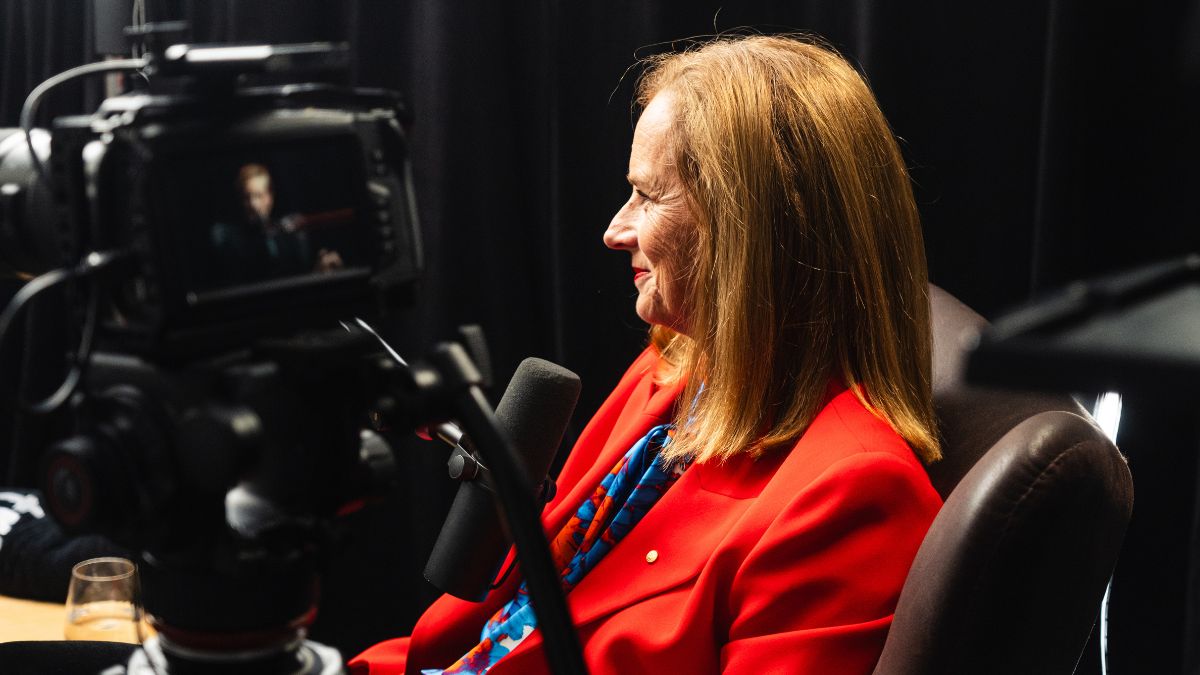
In this episode I share what it is really like to be a startup founder — even if that was a while back for me. And why constant change is making so many business owners more anxious than they want to admit.
When policy makes it hard to back yourself
The most honest thing I can say about the current mood among Australian business owners is this: people are tired. Not lazy, not unwilling — tired. Tired of waking up to a new compliance obligation, a fresh reporting requirement, or another well-intentioned scheme that adds three hours of admin to the week and zero dollars to the till.
Confidence is not built in a single budget speech. It is built over years, through consistency, clarity, and a sense that the rules of the game will hold long enough to make a sensible decision about hiring someone, signing a lease, or investing in new technology. When policy churns, that quiet confidence drains away.
I hear it from the founders I mentor, the operators I speak with at conferences, and the small business owners who connect with me on LinkedIn. They are not asking for handouts. They are asking for a stable runway so they can do what entrepreneurs do — take a risk, employ Australians, and build something that matters. The current settings are making that harder, and we should be honest about it.
What the 2026 federal budget means for small business owners
I am not here to give you a line-by-line breakdown of the 2026 federal budget. There are economists better placed to do that, and you can read the Treasury papers yourself if you want the technical detail. What I can offer is a founder's reading of the mood.
What I am seeing, and what I discussed at length in the recent podcast episode, is that the cumulative weight of regulation has reached a point where it is genuinely shaping behaviour. Owners are choosing not to hire. They are choosing not to expand. They are choosing to stay small because the cost of growing — in time, in compliance, in cash — has tipped the equation.
The table below summarises what I am hearing most often from operators across Australia and New Zealand.
Key budget pressure points for Australian SMEs in 2026
Pressure point: Increased regulatory compliance
- What it means in practice: More time and cost spent on administration, less on growth
Pressure point: Policy instability
- What it means in practice: Harder to plan capital investment or hiring with confidence
Pressure point: Rising cost environment
- What it means in practice: Margins squeezed before revenue growth can offset them
Pressure point: Intergenerational inequality
- What it means in practice: Younger founders and employees facing structural disadvantage
Pressure point: Housing affordability crisis
- What it means in practice: Talent attraction and retention becoming harder outside major CBDs
None of these are new in isolation. What is new is the way they are stacking on top of each other in 2026, creating a weight that genuinely changes the calculation for someone deciding whether to back themselves.
Building something real — one experience every 16 seconds
I do not raise the Big Red Group story to wave a flag. I raise it because it is the clearest proof point I have that customer-obsessed businesses can still grow in tough conditions, and because the businesses connected to our platforms are exactly the small operators feeling the squeeze right now.
When the policy environment gets harder, our job is to make it easier for those operators to find customers. That is the whole point of what we do. And it is why I will keep arguing, loudly and publicly, that small operators are the engine of the Australian economy. They deserve a federal budget that recognises that and a regulatory environment that does not punish them for having a go.
The bigger picture — housing, technology, and a tougher landscape for entrepreneurs
There is something deeper going on in 2026, and I would not be doing my job if I pretended otherwise. The housing crisis is not just a housing story; it is a business story. When a 28-year-old cannot afford to live within an hour of the city where the jobs are, the talent pool shrinks for every employer. When the next generation cannot build any equity in a home, they cannot use that equity to back themselves into a business.
Layer on top of that the genuine disruption being driven by artificial intelligence, automation, and shifting consumer behaviour, and you have an environment where founders are being asked to navigate more change, with thinner margins, against a policy backdrop that is not making it easier.
I do not say any of this to catastrophise. I say it because my approach to intentional leadership starts with telling the truth about the conditions. The Reserve Bank's commentary on productivity, wage growth, and household resilience, which you can read in the RBA's published statements, only reinforces how complex the picture is.
And yet — and this is important — if it is to be, it is up to me has never been a naive idea. In a tougher environment, it is a necessary one. The founders who keep showing up, keep serving their customers, and keep adapting will be the ones who define the next decade of Australian business.
What founders can do right now
I will not pretend there is a five-step formula that solves any of this. There is not. But there are things within your control, and focusing on them is how you keep your confidence steady when the headlines are not.
First, double down on what customer obsession really looks like in practice. The businesses that survive policy uncertainty are the ones whose customers refuse to live without them. Second, build a financial buffer — even a modest one — because optionality is oxygen when conditions change. Third, invest in your own curiosity and continual learning; the founders I admire most read widely, ask better questions, and surround themselves with people who challenge their thinking. Fourth, find your peers. Sitting alone with this stuff is corrosive. A small group of founders who are honest with each other is worth more than any consultant's deck.
Listen to the full episode
If you want the unfiltered version of this conversation, including the parts I have probably softened here, the full episodei s on all the channels love you to listen, and to tell me what you think.
And if your team is looking for a voice on these themes for an upcoming event, you can find speaking and keynote topics for 2026 on the site.
Frequently asked questions
How is the 2026 federal budget affecting small business confidence in Australia?
The 2026 federal budget has introduced a wave of compliance requirements and policy changes that many SME owners say are making it harder to plan and invest with confidence. The cumulative burden of regulation, rather than any single policy, is what founders are feeling most acutely right now.
What is Big Red Group and how does it support small businesses?
Big Red Group is the experience commerce company I co-founded with David Anderson, and it includes RedBalloon, Adrenaline, Experience Oz, Local Agent, and Everything NZ. Together, these platforms deliver an experience every 16 seconds and connect thousands of small business operators across Australia and New Zealand to customers who are ready to buy.
Why is intergenerational inequality a concern for Australian entrepreneurs in 2026?
Rising housing costs and structural barriers are making it harder for younger Australians to build wealth or take the financial risks that entrepreneurship requires. When people cannot afford to house themselves, the idea of backing yourself with a business becomes significantly more difficult.
How can founders maintain confidence when government policy feels unpredictable?
The honest answer is that you cannot control what the government does, but you can control your response to it. Doubling down on customer obsession, building financial resilience, and investing in continual learning are the foundations that help businesses survive policy uncertainty and come out stronger.
Where can I listen to the full podcast episode with Naomi Simson on the federal budget?
The full episode is available on the Handpicked with Naomi Simson podcast. You can find all six seasons and the latest episodes at naomisimson.com/podcast, and I would recommend starting there for the unfiltered version of this conversation.