What AI Is Forcing Every Leader to Rethink
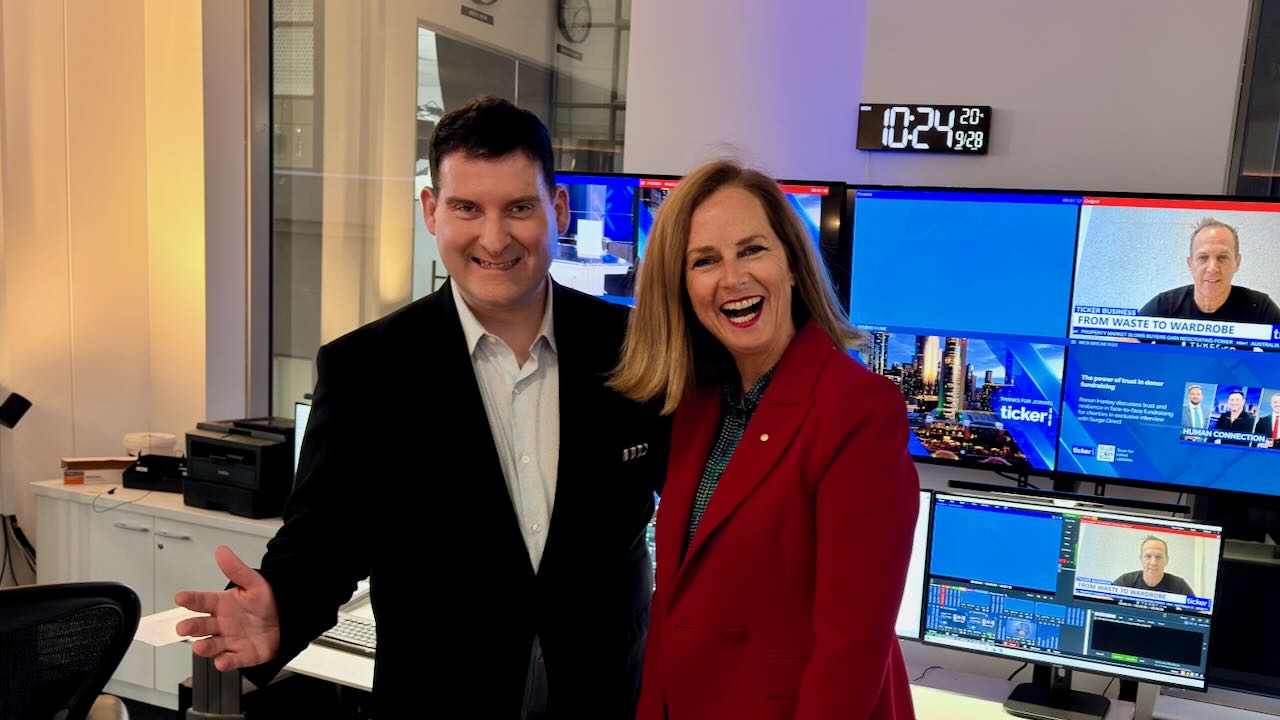
But I have to be honest with you. After sitting in a room with Professor Joel Pearson — neuroscientist, director of the Future Minds Lab at UNSW, and one of the most rigorous thinkers I've encountered — I walked out knowing that the conversation I've been having about growth mindset needs to grow itself.
We are in a different world now. And the mindset required to lead in it goes well beyond what was first described a decade ago. This isn't a revision of growth mindset. It's an upgrade. And if you're a leader — of a business, a team, or your own career — this is the most important thing I can share with you right now.
This Is Not a Technology Revolution. It's an Intelligence Revolution.
Most of us are treating AI like a new piece of software. A productivity tool. A smarter search engine. Professor Pearson was emphatic: that framing is wrong, and it is costing us.
AI is an intelligence revolution. Not since the invention of language or the printing press have we faced a disruption that touches every stratum of society simultaneously — jobs, education, relationships, trust, government, even capitalism itself. The metrics we use to measure economic health — GDP, employment rates, productivity indices — weren't designed for a world where more agents than humans operate on the web. That tipping point, by the way, is not decades away. It's imminent.
Here's what Professor Pearson said that I keep coming back to: AI model capabilities are already far ahead of what is currently being used. We are worrying about the wrong things. The gap between what AI can do and what we are actually doing with it is widening — not narrowing.
For leaders: The conversation about growth mindset can no longer be about whether you're willing to learn new things. It has to be about whether you're willing to rethink what learning itself means.
Why Your Brain Is Working Against You Right Now
One of the most validating moments in that session was when Professor Pearson explained why this transition feels so uncomfortable — even for optimistic, forward-leaning people like most of us in that room.
Our brains are wired for linear change. They evolved to see threats, track patterns, and learn from repetition. Exponential change — where AI capacity doubles every six months — is literally something our neural architecture struggles to process. We keep expecting the curve to flatten. It doesn't.
Add to that the fact that uncertainty is a primary fear stimulus in the human brain. The pandemic primed us all for anxiety responses. AI is now supercharging that same system. Professor Pearson was compassionate but clear: the discomfort you're feeling isn't weakness. It's biology. Everyone around you is more on edge than usual — and that includes your most capable people.
But here's where growth mindset comes back in — evolved. His three-step framework for navigating this uncertainty:
- Embrace: Accept the reality of the situation. The change is locked in. The question is only how you respond.
- Understand: Know why you are reacting the way you are. Self-awareness isn't soft — it's strategic.
- Reframe: Deliberately push small doses of uncertainty into your life every day, and practise reframing them. Cognitive flexibility isn't fixed — it's trainable.
I've been saying this from stages for years in different language. But the neuroscience underneath it is now richer, more urgent, and more specific than ever.
The Concept That Stopped Me — Shoshin
Of all the ideas in that session, the one that hit me hardest was a Japanese Zen Buddhist concept: Shoshin. Beginner's mind.
In the context of AI, Professor Pearson applied it like this: AI levels the playing field. For the first time in most organisations, the leader is no longer the person in the room with all the answers. The hierarchy of knowledge — where seniority equalled expertise — is being disrupted in real time.
The leaders who will thrive are not the ones who pretend to know more than they do. They are the ones who are genuinely curious, openly learning, and comfortable asking better questions rather than providing definitive answers.
Think about what that means for how you show up. The posture of "I have the answer" — which has served many of us well — is becoming a liability. The posture of "I'm in this with you and we're figuring it out together" is becoming a superpower.
I have always said that leadership is intentional. Every conversation, every decision, every email represents who you are. Shoshin adds a new dimension: every admission of uncertainty, every genuine question, every willingness to learn publicly — these are now leadership acts.
Cognitive Offloading vs Cognitive Upsizing — The Distinction That Matters Most
This is the idea I think about every single day now.
Cognitive offloading is what most of us are doing with AI already — moving our thinking onto the tool. Ask it to draft the email. Summarise the report. Build the plan. There is nothing inherently wrong with this. But Professor Pearson sounded a clear warning: if we outsource our thinking without staying engaged in the decisions, our brains will adapt accordingly. Use it or lose it is not a metaphor. It is neuroscience.
Cognitive upsizing is the response. When AI takes something off your plate, don't just fill that space with more of the same. Fill it with bigger thinking. Harder problems. More human questions — the ones that require judgement, context, empathy, and ethical reasoning that AI cannot yet replicate.
The real growth mindset challenge of our era: Not "am I willing to learn AI tools?" but "am I using AI to expand the quality and depth of my thinking — or just to do more of the same, faster?"
The next war for talent, according to Professor Pearson, will centre on rapid skill acquisition and transfer. The ability to unlearn and relearn. That is growth mindset — but it has to be active, not passive. You cannot wait to be trained. You have to get your hands on it, make mistakes, iterate. Like learning to ride a bike: you cannot do it by watching.
The Thing We've Left Out of the Conversation — Purpose
Here is the number that stays with me: a 143% increase in all-cause mortality is associated with low life purpose. One hundred and forty-three percent. And much of the purpose we carry as humans comes from our work — from the problems we solve, the teams we lead, the value we create.
AI is going to change work profoundly. We need to start building organisations — and lives — where people actively find and construct their own motivation and purpose, not have it handed to them by a job title or a routine.
For business leaders, this isn't a future problem. It's a now problem. If your people feel like AI is replacing the parts of their work that made them feel useful, capable, and purposeful — and you haven't addressed that — you don't have an AI adoption problem. You have a human engagement problem.
Professor Pearson offered the BIG framework — deceptively simple, genuinely powerful:
- Balance — a sustainable pace and genuine wellbeing in a time of relentless acceleration.
- Inner wellbeing — the psychological fitness to handle continuous, rapid change.
- Growth Mindset — not as a slogan, but as a daily practice of belief and behaviour.
What This Means For You Right Now
Professor Pearson closed with something I want to carry into every conversation I have from here: "It never gets easier — it just gets faster. Easy is not a good thing. It is overcoming challenge that is what we need as humans."
That is growth mindset at its most evolved. Not "things will get easier if I work hard enough." But "I am built for challenge, and challenge is what makes me grow."
Here is what I'd ask you to do with this:
- Stop waiting to understand AI before engaging with it. Use it. Make mistakes. The innovation adoption curve applies here — the early adopters aren't ahead because they're smarter. They're ahead because they started.
- Check your cognitive offloading. Every time you use an AI tool, ask: am I thinking less, or thinking bigger? The tool should expand your capacity, not replace it.
- Talk to your team about purpose. Not once, in a town hall. Regularly, personally. What gives them meaning? How does your business connect to something beyond the transaction?
- Practise Shoshin. The next time you're in a room and you don't know the answer — say so. Out loud. Watch what happens.
And remember: everyone is figuring this out in real time. Nobody has the complete map. We are all, in the best possible sense, beginners.
If it is to be, it is up to me.
Now more than ever — that is the only mindset that will do.
Frequently Asked Questions
What is the biggest shift in growth mindset thinking for leaders in the age of AI?
The traditional growth mindset framework — the belief that abilities can be developed through dedication and hard work — is still valid. But AI adds a critical new dimension. Leaders now need to practise Shoshin (beginner's mind), embrace cognitive upsizing rather than cognitive offloading, and build resilience to exponential rather than linear change. The shift isn't just about learning — it's about what you do with the capacity that learning frees up.
What is cognitive upsizing and why does it matter for business leaders?
Cognitive upsizing is the practice of using AI to take routine cognitive tasks off your plate — and then deliberately filling that freed capacity with bigger, harder, more human problems. Rather than doing more of the same faster, cognitive upsizing means using AI to elevate the quality of your thinking. It's the antidote to cognitive complacency, and it's central to leading effectively in an AI-powered world.
What is Shoshin and how does it apply to AI leadership?
Shoshin is a Japanese Zen concept meaning "beginner's mind" — approaching any situation with openness and curiosity, free of preconceptions. In the context of AI, it means accepting that the traditional leadership hierarchy of "I have the answers" is being disrupted. The leaders who thrive will be those who ask better questions, learn publicly, and are genuinely comfortable not having all the answers. Shoshin levels the playing field — and that's an opportunity, not a threat.
How should business leaders approach AI adoption in their organisations?
Neuroscientist Professor Joel Pearson recommends the AI DREAM model: start with Actionable inspiration (find your reason to change), move to Discovery (educate yourself actively), build a Roadmap, Execute your integration, Analyse its effectiveness, then Mobilise — share what worked and normalise AI as part of how you operate. Crucially, leaders must also manage the human impact: purpose, psychological safety, and the meaning people draw from their work must be part of every AI transition.
Why is purpose becoming more critical in the age of AI?
Research shows a 143% increase in all-cause mortality associated with low life purpose — and much of the purpose humans derive comes from their work. As AI takes over more tasks, leaders must actively help their teams find and construct new sources of meaning. Businesses that treat AI adoption as purely a productivity exercise, without attending to the human dimension, risk a deep disengagement crisis.
Why should a conference organiser book a keynote speaker on AI and growth mindset?
Because the question every leader in your audience is wrestling with right now isn't "should we use AI?" — it's "what does this mean for how I lead, how my team works, and what kind of organisation I'm building?" A keynote that connects the neuroscience of mindset, the reality of AI-driven change, and practical frameworks for leading through uncertainty gives your audience something they can actually use on Monday morning. That's the conversation that matters most right now.
Naomi Simson is an Australian entrepreneur, founder of RedBalloon, keynote speaker, and independent director. She has been keynoting on growth mindset, leadership, and building businesses that matter for over two decades. She writes about the intersection of human leadership and rapid change.
Connect: linkedin.com/in/naomisimson