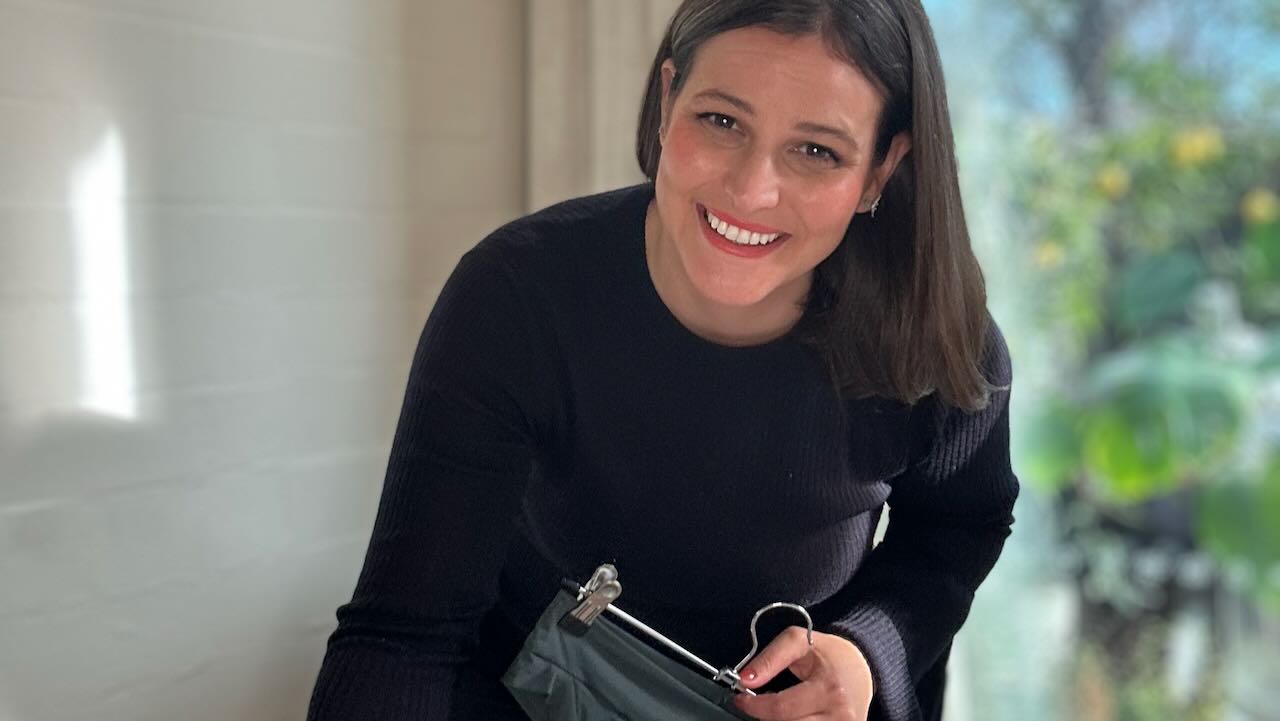
"Do I go slow and steady and safe, or do I seek investment and really turbocharge it?" In the episode "Let Your Customers Fund Your Growth" that was the question Lisa Taylor brought to the Handpicked podcast, and it is the question I get asked more than any other. Lisa founded Wicks Intimates, an absorbent lingerie label she designs in Melbourne and manufactures in Sri Lanka, and she has arrived at the point every founder reaches about eighteen months in — the business is working, the path forward is visible, and the only thing standing between here and there appears to be money.
What makes Lisa's story worth listening to is how she got to that point. She launched with an idea drawn from her own postpartum experience: but in this episode we explore not the product as much as we explore what it takes to be customer obsessed and relentless execution.
That is a founder who has done the hard part. She listened, she learned, and she was willing to be wrong about her own idea. So when she asks whether to raise money, my answer is straight forward. It is a different question entirely.
Why Do You Want the Money?
Before anything else: debt is cheaper than equity. Once you have sold a piece of your business, it is very hard to get it back. Management buyouts are rare. That share is gone, and it is gone for as long as the business exists.
There is a second cost that founders underestimate, and it isn't financial. An investor may well change the trajectory of your business, because their agenda may be genuinely different from yours. They are not being difficult when they do this. They simply want something that isn't quite what you want.
Which is why, if you are going to take investment, the thing to look for is not the cheque. It is a shared sense of values and a shared sense of purpose. The best investor is somebody who already knows your industry, has come from it, and is going to give you a great deal more than cash. That is a strategic investor, and they are worth waiting for.
I should also be honest about the market. Angel investment in Australia is very hard right now — really hard. The reason is straightforward: over many years, a lot of angels have not seen a return. Angel money usually goes in at the pre-revenue or early-revenue stage, and people are far more circumspect than they used to be about backing a founder they don't know, in an industry they don't know, where they are not sure what value they would add.
And then there is the one that catches nearly every solo founder off guard: key man risk. Whenever one person came in to pitch, the first thing we would ask was, "Who else is there?" An investor is buying a business, not a person. The founder matters enormously — but if the business stops when you stop, that is a very big risk to put money into.
The Third Option Nobody Pitches You
Slow and steady, or raise money. Most founders think those are the two doors. There is a third, and it is the one I would look at first: find a partner.
Not a passive investor. Somebody already working in the space, who brings resources you don't have, so that when you put the two sets together you have not just more capacity but different skills and different talents. Perhaps they have already exited a business. Perhaps they are running one in an adjacent domain. Either way, what they contribute is sweat equity — which every founder understands and which, as far as I can tell, our government still does not, given that every single founder I know has worked for nothing at some point. I should have gone and got a job. I'd be wealthier.
I was very fortunate to have Gemma join me early. She used to say she was the detail to my devil, and that was about right — I would create the big vision and she would make certain every part of it was executed properly. We were yin and yang. That partnership shaped the business far more than any amount of capital would have.
There is a version of this that costs almost nothing, and it is where I would start.
About eighteen months in, things were chaos. Genuine chaos. I was answering phones, printing vouchers and blowing up balloons, all of it, all at once. And I realised the thing that would let us scale wasn't more of me — it was consistency. The product is only ever as good as the description on the website, because that is what the customer expects. One day a rally drive was twenty-five minutes; the next it was twenty. If somebody paid for twenty-five minutes, they get twenty-five minutes. That had to become a service level agreement. Quality builds trust, and detail is what makes quality repeatable.
So I put an ad on Monster.com. It cost me thirty dollars. I got two applicants and I could not choose between them, so I hired both — Gemma and Elizabeth — even though I did not really have the money. I figured they would create the growth. Gemma stayed twenty-three years. Elizabeth was with us three or four and then became a supplier; we are still in touch.
For the first time, I was not on the back foot. I had enough bandwidth to actually build a business — to answer suppliers properly, to answer customers properly.
You do not need those people to be full time. In your own community there are people who want a few hours a week and are genuinely excellent at one thing — a bookkeeper, someone who is superb at customer questions, someone who can sell. Get a tribe around you who are very good at what they do, then be clear about what each of them is accountable for. Right people, right roles.
And underneath all of it, one rule. The thing that made our culture work was not complicated: do what you say you're going to do. That is the whole secret sauce. Everyone had worked somewhere that people turned up late, or never reviewed your work, or left you waiting to get on with your job. We just didn't want to be that.
Small Business Is Not a Bank
Here is the part of Lisa's question that actually matters, and it is not about investors at all. It is about how cash moves through her business compared with mine.
In an experiences marketplace, the cash arrives before the expense — the customer pays, and the supplier is paid after the order is made. In a product business it runs the other way. You place your cash with the manufacturer, and only then do you sell the product. That is not a capital problem. It is a cash flow problem, and capital is an expensive way to solve it.
So I would look at the cash flow model before I looked at the cap table. I have seen product businesses with some public presence or a genuine following go to their customers and ask for pre-orders, and use that cash to fund the growth. You are far better off getting your customers to fund your growth than your investors. I sound like a broken record on this and I am going to keep saying it.
Because investors are looking for a return on their capital, and they are looking for a payday one day. If you cannot show them how they get their money out, it is very hard to get the money in.
Lisa mentioned she had a meeting that afternoon about wholesale and pre-orders, and this is where I would urge real caution. Watch the terms. I have seen this pattern many times with founders I have backed: you place an order and pay a fifty per cent deposit to a manufacturer overseas. You pay the balance when the goods leave the port. Then the large retailer gives you ninety-day terms.
Add that up. You are funding that stock for something like a hundred and eighty days. Half a year. Small business is not a bank, and the margins on wholesale are not enough to cover being one. Big business in Australia is meant to pay small business within fourteen days now, or report on why it hasn't — but all I am saying is, go in with your eyes open.
It is precisely why a lot of founders choose to grow one customer at a time online and keep their margin, rather than chase the volume and lose it.
One last thing I said to Lisa, because it applies to almost everyone reading this. She is no longer the trailblazer in her category — others have arrived. Founders often find that frightening. I don't. When people copied us, all it proved was that we had created an industry. One competitor's brand guidelines described them as being like us, only different. Another told me on the phone they were "just like RedBalloon, only better." Fine. We had become the default.
Competition is not the threat. Being unclear about why you are the better choice — that is the threat.
What Is Key Man Risk (And Why It Kills Solo Pitches)
Whenever one person came in to pitch on Shark Tank, often the question would be, "Have you got a team or are you on your own?"
It sounds like a throwaway question. It isn't. It is the whole assessment in a few words.
Key man risk is the risk that a business depends entirely on one person. If you stop, it stops. The relationships live in your phone. The supplier knows your voice. The customers came because of you. Nothing moves unless you move it.
Founders often hear that question as a challenge to their worth, and it is the opposite. The founder matters enormously — nobody is disputing that. But an investor is buying a business, not a person. And if the business is a person, there is nothing to buy.
Think about it from their side of the table. They are putting money in on the expectation of getting money out. Every one of them is running the same quiet scenario: what happens if the founder gets sick, burns out, has a baby, falls out of love with the whole thing, or simply gets an offer they can't refuse? If the honest answer is "then there's no business," the cheque doesn't get written. It has very little to do with how good the idea is.
I see this catch strong founders off guard constantly. The pitch is excellent. The numbers stack up. The product is genuinely wanted. And then: who else is there? And the room goes quiet.
How to reduce key man risk before you pitch
You don't fix this by hiring an executive team you can't afford. You fix it by making the business work without you in the room.
Write things down. If the way you handle a supplier dispute or a refund or a launch only exists in your head, it isn't a process, it's a habit. Document it and it becomes an asset someone can buy.
Get a tribe around you. In your own community there are people who want a few hours a week and are genuinely excellent at one thing — a bookkeeper, someone superb at customer questions, someone who can sell. They don't have to be full time. They have to be accountable for something specific. Right people, right roles.
Find a partner, not just a hire. I've seen partnerships shaping the business far more than any amount of capital would have - because they bring different skills, expertise and networks.
Then hold the whole thing together with one rule: do what you say you're going to do. That's the secret sauce. A business where that is true of everybody is a business that runs when you're not watching — and that is precisely what an investor is trying to buy.
A massive thank you to Odoo.com for its continued support of business owners. Click here for more information
Frequently Asked Questions
Should I raise investment to grow my small business?
Only once you can answer why you want the money, and only after you have looked at cheaper options. Debt costs less than equity, and equity is nearly impossible to buy back. Before raising, examine whether what you actually have is a cash flow problem — because capital is an expensive way to fix cash flow.
Why is angel investment so difficult in Australia right now?
Because over many years a lot of angel investors have not received a return. Angel money typically goes in at the pre-revenue or early-revenue stage, and investors have become far more careful about backing founders and industries they don't know well, where they are unsure what value they can add beyond the cheque.
What is key man risk and why does it matter to investors?
It is the risk that a business depends entirely on one person. Investors want to back a business, not a single individual — so if everything stops when you stop, that is a serious concern for them. It is one of the most common reasons a strong solo pitch does not convert.
How can customers fund business growth instead of investors?
Through your cash flow model. Pre-orders are the clearest example: customers pay before you manufacture, which reverses the cash cycle that makes product businesses so capital-hungry. It works best where you already have a following or genuine public interest, and it costs you no equity at all.
What should I watch for in wholesale terms with large retailers?
The total time you are funding the stock. A fifty per cent deposit to the manufacturer, the balance due when goods leave the port, then ninety-day payment terms from the retailer can leave you financing that order for around a hundred and eighty days. Check whether your margin can genuinely carry that before you sign.
Listen to the full episode with Lisa Taylor of Wicks Intimates