When I started RedBalloon, I won our first corporate customers by standing at trade shows and looking people in the eye. They needed to see that we were real, that I was real, and that we would do what we said we would do. No website could do that for me.
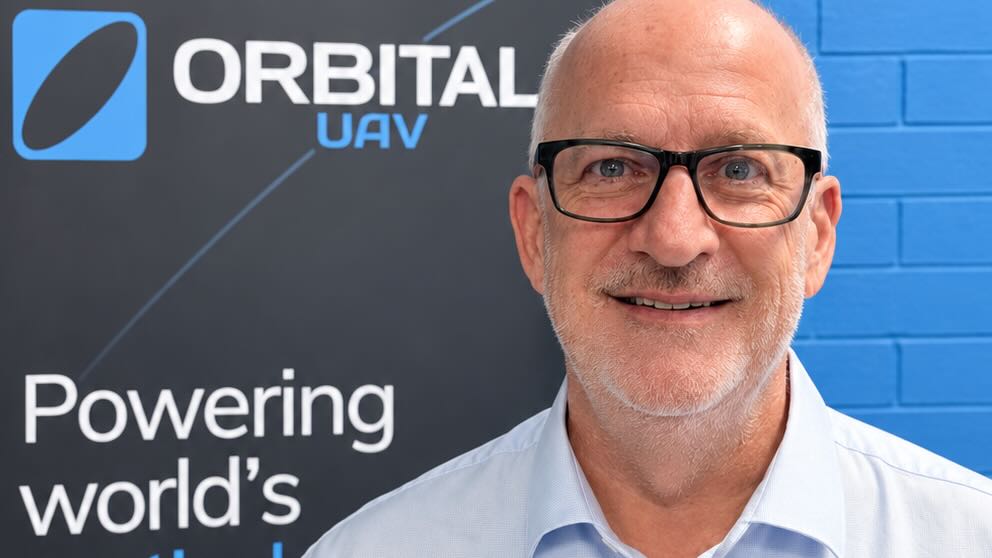
I was reminded of those days when I sat down on Handpicked with Mark Wege, CFO of Orbital UAV. His company builds propulsion systems for military and commercial drones from a suburb of Perth. Mark told me that almost all of its customers are overseas. His advice for any founder with a big idea was simple and blunt: you have to build for the global market from day one.
A 40-Year-Old Startup in the Perth Suburbs
Many of us remember Ralph Sarich. He was named Inventor of the Year on the ABC's The Inventors in the 1970s for his orbital engine, a design meant to be smaller, lighter and more fuel efficient than the engines car makers were using. With backing from BHP, his Orbital Engine Company grew into an ASX-listed business, known today as Orbital UAV (Orbital Corporation, ASX: OEC).
The car industry never adopted the orbital engine. But the fuel injection and engine control technology that came out of it found new life. Over the past decade the company turned its focus to unmanned aerial vehicles, and today it supplies complete propulsion systems for drones weighing roughly 25 to 600 kilograms: the engine, air intake and exhaust, the control system, and power management that runs other systems on board.
Mark calls it "a 40-year-old startup". I love that. The business has reinvented itself more than once, yet it still carries the risk-taking spirit of the inventor who started it more than 50 years ago.
Why You Can't Bolt On Global Later
Australia has always been famous for ingenuity. We are not nearly as famous for keeping that ingenuity here and scaling it. CSIRO's research helped create Wi-Fi, yet the industry built on it grew offshore. It is a pattern I find deeply frustrating.
Mark's view is that the answer starts on day one. "There's no point building for Australian conditions and then trying to adapt your product as you export," he told me. Australia is a wonderful place to engineer, with talented people who punch well above their weight, but it is a small market. If you design for it first, you will be redesigning for everyone else later.
And the differences go well beyond the product. Orbital sells into the US, Asia Pacific, the Middle East and Europe. Each market buys differently. Procurement processes differ. Expectations around negotiation and price differ. Cultural norms differ. In business-to-business technology, these behaviours are deeply institutional. What works in Australia tells you very little about what will work in Washington or Singapore.
From my own experience, and from watching Shark Tank businesses go offshore, I would add regulation to that list. Tax, safety and workplace laws change at every border. Going into new markets is not for the faint-hearted, so plan for it from the start.
Distance Stopped Mattering. Trust Didn't.
"Distance doesn't matter like it used to," Mark said. His team can start the day on a video call with a US customer, hold internal meetings through the middle of the day, speak with Asian suppliers in the afternoon, and respond before heading home. Their customer wakes up with the answer. Technology has taken away the tyranny of distance, as long as you build your whole way of operating around it.
But here is the part I think every founder needs to hear. The contract that made Orbital came from getting on a plane.
More than a decade ago, the company set out to win work with Insitu, then a Boeing subsidiary, which needed a small engine for a new drone program for the US military. The team went to America, sat in front of the decision makers, and brought them back to Perth to see what Orbital could do. That persistence paid off. Orbital went on to design the engine used in Insitu's ScanEagle drones, and Mark told me their engines have now logged more than a million hours of flight time with US naval operations. That track record now opens doors with new customers.
Trade shows still matter enormously in this industry. Orbital exhibits globally, including at the Farnborough Airshow in the UK. Their engines are compact enough to pack into a large briefcase, so buyers can see and touch the technology. That is how trust is built: face to face, over time, and then passed along through reputation and referral.
It is the same lesson I learned with RedBalloon, and the same thing I saw with one of our most globally successful Shark Tank businesses. They went to trade shows, met people, found joint-venture partners who knew their markets, and expanded into new countries far faster than they could have alone. I unpack how warm referrals open international doors in my conversation When Custom Meets Scale.
Brilliant Is Not the Same as Manufacturable and Profitable
This was the insight from our conversation that I keep coming back to.
"You can have the most brilliant, best-in-class product," Mark said, "but if it's not manufacturable and profitable, those two things are not the same thing." If you cannot make it repeatedly, at a cost that leaves you a margin, then commercially it does not exist.
Engineers optimise for the best possible product, exactly as they should. But supply chain, capital equipment, labour and investment all have to be part of the design process from the beginning. You cannot backfill them after the event. I would add one thing from my own journey: keep your operating costs lean so you can invest in the things that drive success, which are sales, marketing and product development.
The Systems That Let You Say Yes
Mark was candid that Orbital used to be a very siloed business. Everyone worked in their own lane, and there was plenty of conflict between them. Today, when an engineer makes a design change, they can immediately see the impact on supplier lead times and costs. Design and iteration happen in real time rather than in six-month loops.
That matters because the market has changed. Defence customers care most about reliability. The growing commercial drone market, used in agriculture, cargo, forestry, disaster relief and border surveillance, wants a nimbler, lower-cost supplier across many use cases. Mark described a phone call one Friday about a multimillion-dollar opportunity for a product that was not quite ready. A year earlier, the organisation would have said no. This time, everyone asked what they needed to do to make it happen.
That is the power of the right systems, and Orbital credits Odoo as part of that change. It took me straight back to my own days of selling futures. My head of engineering used to tell me, "It's only going to cost you time and money." Some things never change: the sales team says yes, the engineers worry about the deadline, and somehow you make it happen.
How to Use Austrade (and Why You Need to Work Them Hard)
If you are starting out and wondering how to open doors overseas, Mark's advice was practical. Austrade has people on the ground in most major markets. "They don't know your product, and they don't know all the technical stuff," he said, "but they know who to get you in front of." His tip: manage them closely and work them hard to get what you need.
There is also funding and support for exporters, including through Export Finance Australia, the government's export credit agency, which you may remember as EFIC. Check what you might be eligible for early in your planning. And if you need growth capital without selling equity, this episode on funding growth is worth a listen.
Mark's Two-Question Test for Any Big Idea
Investors, Mark reminded me, are not backing the product. They are backing the story about revenue and where the business is going. If you cannot tell that story convincingly, the idea does not get funded.
So how do you know if your idea is worth backing? Mark left me with a test I will be using for a long time. Two things have to be true. First, the physics has to work: the product must do what you say it does. Second, a real customer has to tell you they will buy it if it exists.
If you can answer both, you are go. If you cannot, keep working until you can.
Orbital's story shows that Australian ingenuity can stay here, create skilled jobs here, and still sell to the world. It just has to be designed for the world from the very first day. If it is to be, it is up to me, and it is up to every one of us building something real.
This episode was made with our sponsor, Odoo.com.
Listen to the full "Build for the World from Day One" episode here.
[ADD APPLE PODCASTS EMBED HERE BEFORE PUBLISHING]
Frequently Asked Questions on Building for the World from Day One
What does it mean to build for the global market from day one?
It means designing your product, pricing and sales approach for the largest market you can reach, not for Australia first. Orbital UAV's CFO Mark Wege says adapting an Australian product for export later rarely works, because procurement, negotiation and cultural expectations differ in every country.
How can Australian founders use Austrade?
Austrade has people in most major markets who can introduce you to buyers and partners. According to Mark Wege, they won't understand your technology, but they know who to put you in front of. He advises managing them closely and working them hard to get what you need.
Why isn't a great product enough?
A product only exists commercially if you can make it repeatedly, at a cost that leaves a profit margin. Manufacturable and profitable are two different tests. Supply chain, capital equipment and labour need to be part of the design from the start, not fixed afterwards.
How do you test whether a big idea is worth backing?
Mark Wege uses two questions. Does the physics work, meaning the product does what you say it does? And has a real customer told you they will buy it if it exists? If you can answer yes to both, you're go.
Does distance still matter for Australian exporters?
Less than it did. Video calls let a Perth team work with US customers in the morning and Asian suppliers in the afternoon. But trust still takes a plane ticket: Orbital's defining contract with Insitu, then a Boeing subsidiary, came from sitting in front of the customer.
Who is Orbital UAV?
Orbital UAV is the trading name of ASX-listed Orbital Corporation, based in Balcatta, Perth. It began as Ralph Sarich's orbital engine company and now designs and manufactures propulsion systems for military and commercial drones.