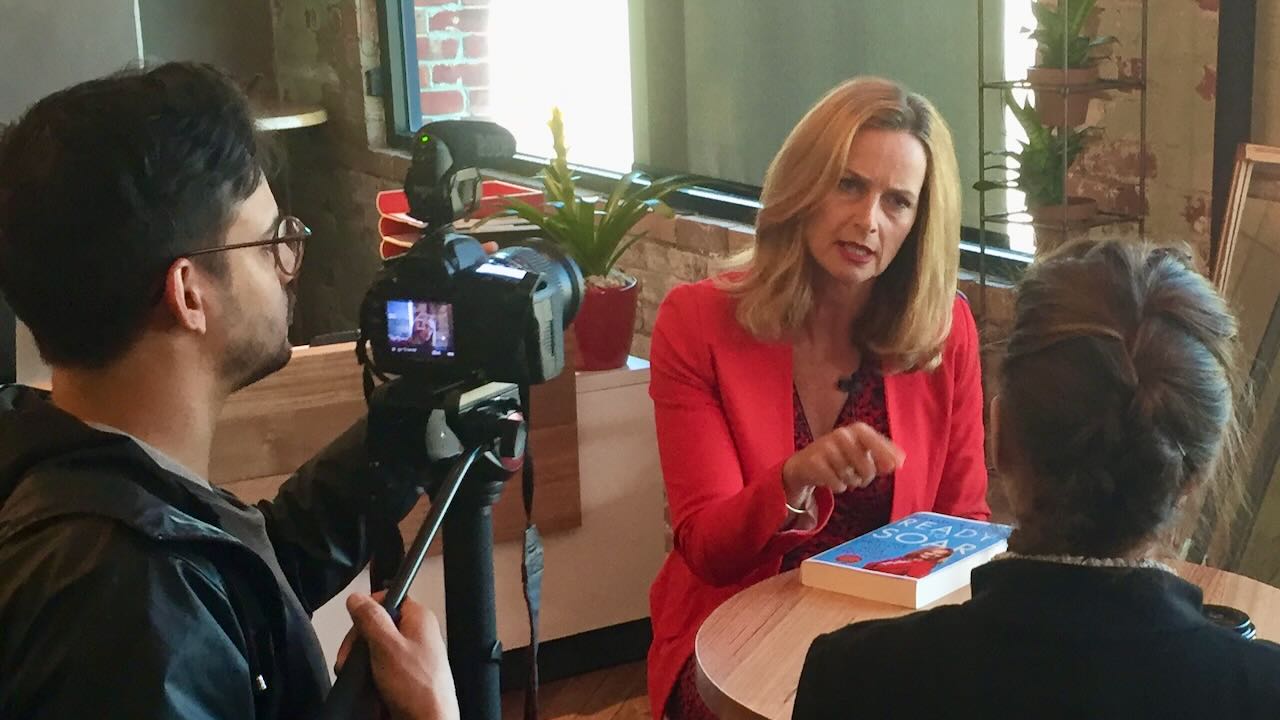
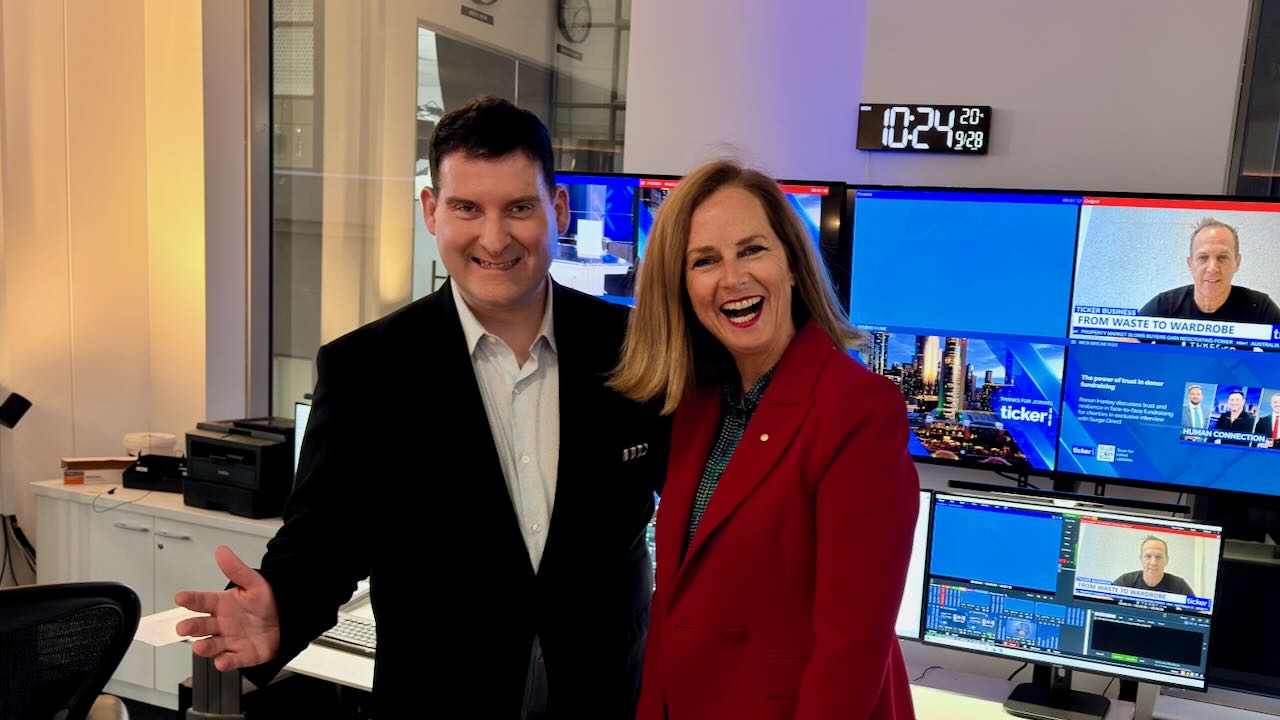
When I sat down with Ahron Young on Ticker recently, he asked me a simple question. At what stage did I first get a full week off from RedBalloon?
The answer was complicated. I had small kids at home, and they were demanding in the best possible way, so I did schedule holidays. But this was long before remote work was normal. Back then I was working in the business with my husband, so it was always one of us or the other. We swapped in and out. And when you do that, you don't get family holidays, and you don't get time together.
We even convinced ourselves that nobody wanted to buy experiences in January, so we could close the business for a break. How wrong we got that. It doesn't work that way.
Ahron was generous enough to share his own story. He had two weeks off coming up and had spent about three months preparing for them, because after seven years of building his business, he said that if he couldn't take two weeks off, he would see it as a failure. I loved his honesty, and I suspect a lot of business owners are quietly running the same test.
One in three owners have never taken a week off
The research behind our conversation is sobering. In April 2026, BizCover surveyed 1,500 of its Australian small business customers, and 31.7% said they have never taken a single full week off while running their business. Among owners working 60 or more hours a week, that rises to 60%.
It gets harder to read from there. Around six in ten owners worked through illness in the past year rather than taking time off completely. Owners working 60+ hour weeks were twelve times more likely to say that running their business had a negative effect on their personal life. And the longer a business runs, the more likely its owner is to have considered closing it. Almost one in four owners who have been in business for eight to ten years thought about closing in the past year. BizCover calls it the 8-year wall. At seven years, Ahron is standing right in front of it.
I wrote about the structural side of this in The Hidden Cost of Owning a Small Business. Associate Professor Carol Tan from RMIT University summed it up well in her response to the research: "Scaling successfully requires founders to create capacity beyond what they can personally deliver."
This post is about the leadership side. Before we can build that capacity, we have to be honest about what is driving us.
Stress vs distress: know which one is driving you
As Ahron put it, founders often talk to each other as if there is a competition to work harder. Working 100 hours a week becomes a badge of honour. Passion and momentum are the founder code, and burnout is something chasing us down the path that we are sure we can stay ahead of.
Here is the distinction I shared with him. There is a difference between stress and distress.
Stress can be a great adrenaline rush. It can give us the momentum we need to get through some really hard stuff. Health professionals often call this helpful kind of pressure eustress. Queensland's Metro North Health describes it as stress that feels manageable, sharpens focus and improves performance. Distress is the opposite. It feels overwhelming, it scatters your focus and it makes your performance worse.
Even the good kind of stress is not sustainable forever. So the question every leader needs to ask is simple: am I controlling the stress, or is the stress controlling me?
I know where that line is, because I crossed it. I got to the point where I couldn't sleep and I was worried all the time. I was anxious. That is distress, and no amount of passion was going to push me through it. I had to invest in myself, and it didn't take much: breathwork, nutrition, hydration. Simple things, done consistently. I've shared the daily non-negotiables that keep me steady in another post.
My husband now thinks all I do is look after myself. I tell him I'm here for the world, and I have to look after myself to do that. Looking after yourself is not self-indulgence. It is part of the job.
Your inbox will never be empty
Every leader needs to accept one thing early: your inbox will never be empty. If you are running your business based on what lands in your inbox, you are not leading it. You are reacting to it.
I remember one of my entrepreneur colleagues saying to me, "You always seem to be on holidays." My answer was, "No, it's my creative time." If you are always rushing, there is no space for creativity, imagination or dreaming, and that is exactly what we need to do as leaders. We need to think about the future and plan for it. We need to be out of the detail so we can consider where we could go, or would go, if we had the time, energy and money. It's why I believe our best ideas rarely arrive while we're staring at a screen.
Refreshing yourself is not only about rest. I'm a big believer in education. I read, and it's why I write this blog. I'm happy to share what I've learned, and the learning itself fills the tank.
It isn't delegation. It's letting people do their job.
A lot of owners feel guilty stepping away. They feel as though they're leaving the team to do all the work while they take a break. Underneath the guilt, there is often a trust problem. Many owners don't believe anyone else can do the job as well as they can. That's a really big issue, because it means the business owns you, and you have no contingency.
We saw this again and again on Shark Tank. If there was a sole founder and no backup, it was really hard to be investable. I've written more about founders who buckle under the weight of their own success.
So I don't think delegation is the right word. The reality is that it's about allowing people to do their job. That starts with the leader clearly articulating three things for every person: their role, their responsibilities and what success looks like.
Our job as a CEO is to create the vision and align everybody to the plan. Plan and strategy are not done daily. If everyone knows their role in the plan and what success looks like, you should be able to step out. If you can't, that says more about the clarity of the plan than the capability of your people.
This is also where many leaders confuse control with care. I've written about why control and micromanagement are different. I have a true belief in people. They want to do the right thing, they want to work hard, they want to learn and they want to have a great experience. Our job is to make that possible, and then get out of the way.

Contingency is a leadership decision
There has never been a bigger time of change for business owners. The rate of change is tremendous, and at times horrendous. That makes it even more important to know what is in, what is out and what you say no to, and to make sure the business does not depend on you when you're not there.
Contingency sounds expensive. One of the best hires I ever made tells a different story. About 23 years ago, when RedBalloon was only two years old, I put an ad on Monster. That's how long ago it was. The ad cost $30, and I couldn't choose between the two final candidates. They were both amazing, so I employed them both.
For the first time ever, I had contingency. Both were incredible contributors in very different ways. Gemma worked with me for 23 years. Elizabeth worked with us for three or four years, then became a supplier, a partner and a long-time friend.
So how do you build contingency and capacity into your business? Look at your constraints. Where is the friction? Go to work on relieving that friction, because that is where the real opportunity lies.
AI is not giving you your time back
I know we're all a bit tired of AI conversations. Everyone seems to have a story about how a tool saved them so much time. But what I'm seeing with founders and business owners is that they're now trying to do even more. AI hasn't saved them any time. In fact, they're taking on projects they never thought they could.
That's exciting, but there is a hidden risk. If leaders are exhausted, they might not be checking the work properly. That's why I say AI is a leadership challenge before it is a technology one, and why most companies aren't failing at AI, they're failing at leadership. Use the time AI gives you to think, not just to do more.
Lead your family through the purpose, too
The hidden cost of constant work doesn't stay inside the business. It comes home. In the BizCover research, the two most common sacrifices owners named were financial stability and time with family or friends, each chosen by 26.5% of owners.
My kids made a real contribution to building RedBalloon, and I have thanked them for it many times. Around Valentine's Day, I had them blowing up balloons. My son would research new potential experiences. They were very involved.
I'm on the Cerebral Palsy Research Foundation board, and I recently met with a group of doctors who were worried about their own kids because they work so much. My advice to them was simple: let your kids know why you do what you do. We talk about purpose in business all the time. Do it for your family as well.
When I explained to my kids that every single RedBalloon experience meant somebody had a job, often in a small business in rural or regional Australia that was struggling to find customers, they got it. I don't think you need to get your family working in the business, but do bring them into the purpose, and let them know where you are.
And when I was with them, I was in their world. Playing Monopoly (they've never won), and now Monopoly Deal, which is much faster. Really listening. That time was always precious, and it's still the most important KPI I know.
It matters because purpose is what keeps owners going. In BizCover's research, 34.7% of owners said personal fulfilment and purpose were the most rewarding part of running a business. Only 10.5% said financial reward. If purpose is what fuels us, the people who pay the price for our absence deserve to understand it.
If it is to be, it is up to me. But not only me.
Ahron's last question was whether anyone else wears the red jacket when I go away for a week. They don't. There's plenty of merch the team wears, but the red jacket stays with me. The business, on the other hand, should never need me to be there.
When BizCover asked owners what they would do differently if they started again, the most common answer was setting clearer boundaries around work hours (43.5%), followed by seeking more support or mentorship (38.2%). Both are leadership decisions, and neither needs to wait until you start again.
So here are three questions I'd ask yourself this week:
- Is stress driving me forward, or have I tipped into distress?
- Does every person on my team know their role, their responsibilities and what success looks like?
- If I stepped away for a week, where would the friction show up first?
My motto has always been "If it is to be, it is up to me." I still believe it. But leading well means building a business, a team and a family that understand the purpose, so that it doesn't have to be only me.
If stress has tipped into distress for you, please talk to someone. Your GP is a good place to start, and support services such as Beyond Blue and Lifeline are there for exactly these moments.
If you'd like to bring this conversation to your leadership team or conference, you can find out more about my keynote topics.
Frequently asked questions
What is the difference between stress and distress?
Stress can be productive. In the short term it gives you energy, focus and momentum to get through hard things, and health professionals often call this eustress. Distress is when the pressure becomes overwhelming: you can't sleep, you're anxious and your focus and performance suffer. The key question is whether you are controlling the stress or it is controlling you.
Why do so many small business owners never take a week off?
A 2026 BizCover survey of 1,500 Australian small business customers found that 31.7% have never taken a full week off while running their business, rising to 60% among owners working 60+ hours a week. Often the business has been built around the owner, with no one else trusted or equipped to step in.
How can leaders step away without the business falling over?
Start by clearly articulating each person's role, responsibilities and what success looks like. The leader's job is to set the vision and align everyone to the plan, and plan and strategy are not done daily. When people know their part in the plan, the leader can step out. Building contingency, such as having more than one person able to do critical work, is part of the same decision.
Is AI helping business owners reduce stress?
Not always. Many founders are using the time AI saves to take on even more work. If they're exhausted, they may not be checking that work properly, which creates new risks. AI helps most when leaders use the time it frees up to think and plan, not simply to do more.