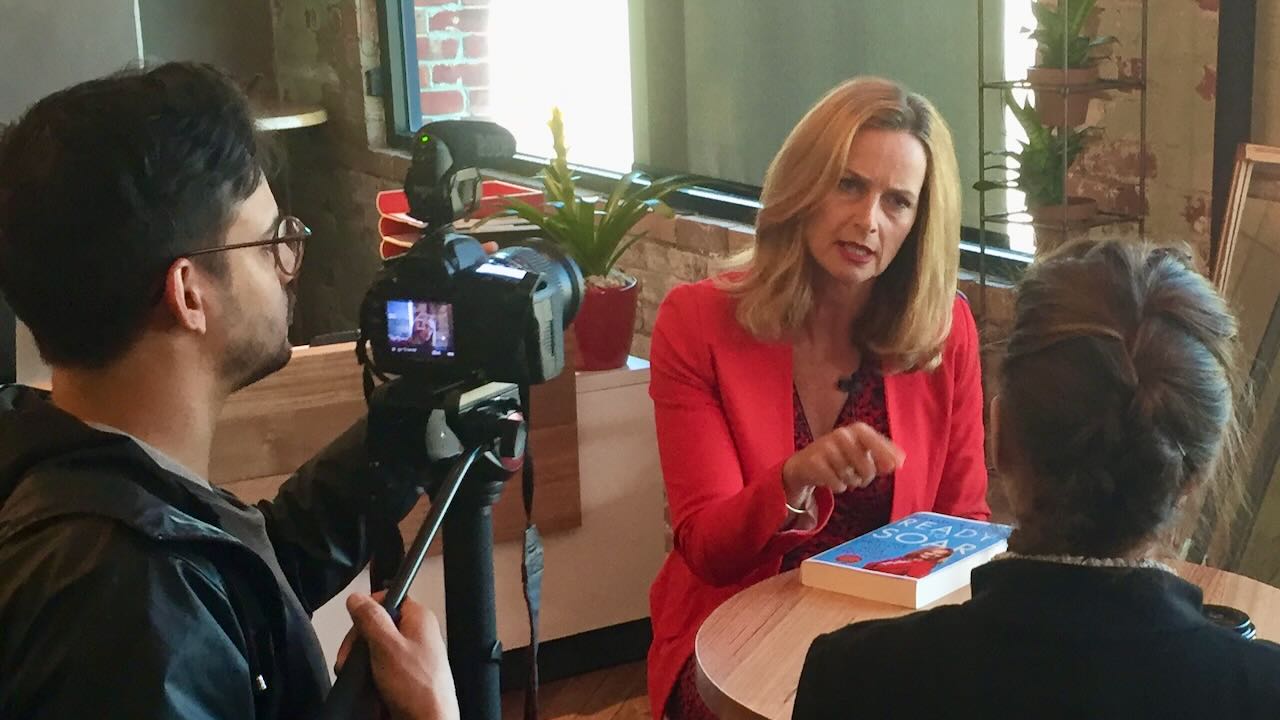

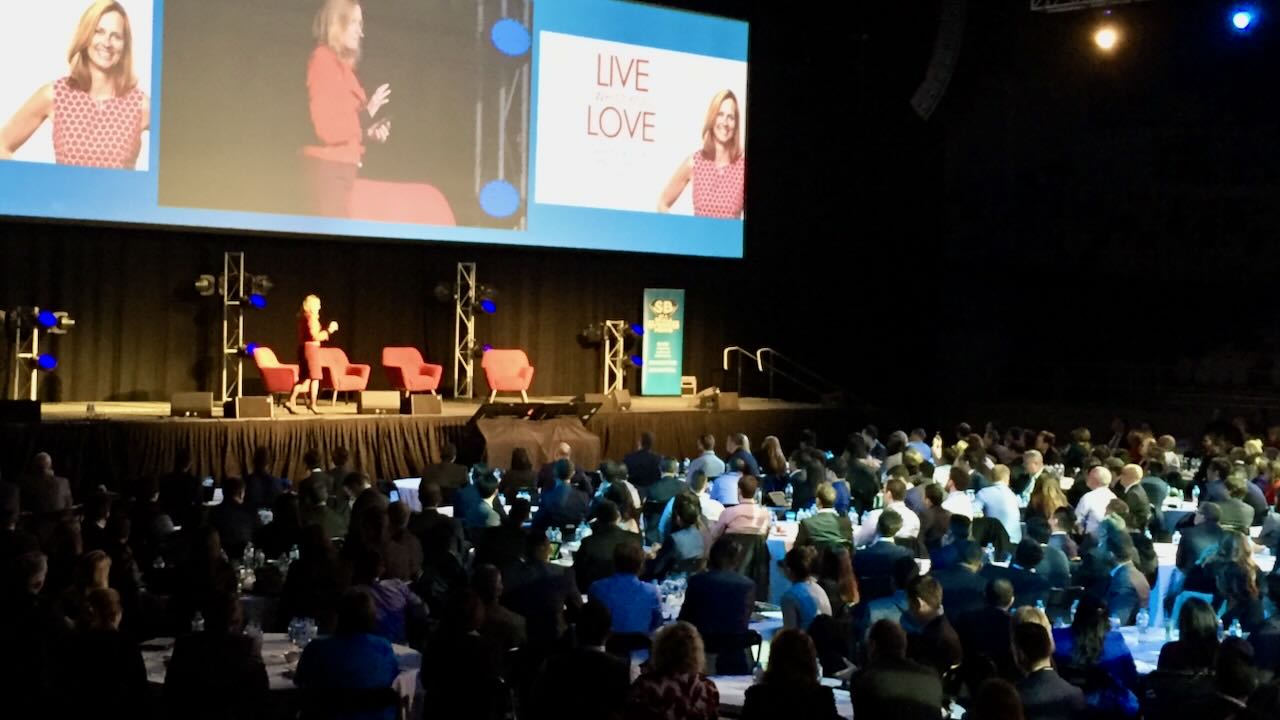
When ever I take to the stage with an audience of business owners I like to ask the question "Is being a business owner what you thought it would be - is the inbox ever empty, do you ever feel on top of things?" The answers are always the same - and the real question we are left with is - "when are we going to have some fun? - or maybe a day off?"
That feeling is pervasive, and new research in 2026 confirms it. The BizCover report analysed by RMIT University found that one in three Australian small business owners have never taken a full week off work. Many are pushing through illness. Many are missing family milestones. The hidden cost of owning a small business is not on any balance sheet — it shows up in our health, our relationships, and the quiet erosion of the freedom we told ourselves we were building toward.
“Entrepreneurship was never meant to be a lone-ranger journey. Sustainable growth is achieved when businesses can continue to create value without relying on the owner’s constant involvement.” Dr Carol Tan is an Associate Professor and Program Manager of the Master of Fashion Entrepreneurship at RMIT University, with research expertise in SME competitive advantage, growth strategies and enterprise resilience
When the business can't run without you, something has to give
Associate Professor Carol Tan from the School of Fashion and Textiles at RMIT University has been direct about what the numbers reveal. She has described entrepreneurship as something that should not be a "lone-ranger journey," and she names owner-dependency for what it is: a structural warning sign, not a badge of honour.
I think this is the reframe most of us need. For years I wore my ability to hold everything together as evidence of commitment. If the business needed me at midnight, I was there. If a supplier went sideways, I fixed it personally. But the moment a business cannot function without one person, that person has become the ceiling.
The old Michael Gerber distinction between working in the business and working on the business is worn, but it still holds. Working in the business is answering the emails, taking the calls, and solving today's fire. Working on the business is building the systems, the team, and the decision rights so those fires get solved without you. I have lived both, at RedBalloon and later at Big Red Group, and the second one is harder. It requires trust, patience, and a willingness to watch other people do things differently to how you would do them.
What the research shows — and why it matters in 2026
The BizCover findings, brought to public attention through RMIT University this year, put numbers to something founders have felt for a long time. It is worth sitting with the data rather than skimming past it.
Finding: Owners who have never taken a full week off
- Detail: 1 in 3 Australian small business owners
Finding: Common personal costs reported
- Detail: Pushing through illness, missing family milestones
Finding: Operational impact
- Detail: Severe operational strain; business cannot function without owner
Finding: Structural risk identified
- Detail: Owner-dependency limits scaling and business resilience
Finding: RMIT expert finding
- Detail: Overwork is a structural warning sign, not a personal failing
Carol Tan's point about entrepreneurship not being a lone-ranger journey matters here. When one in three owners have never taken a full week off, that is not a story about individual grit or personal weakness. It is a pattern. It tells us we have collectively built a small business culture in Australia where the owner is the load-bearing wall, and the wall is tired.
The reason it matters in 2026 is that costs have moved, interest rates have shifted the ground under many small operators, and the appetite to "just push harder" is running out. The founders I speak with — at events, on my podcast, and through my keynotes — are not asking how to work more hours. They are asking how to keep going without losing themselves.

The bottleneck is you — and that is not a compliment
There is a moment, usually somewhere between year three and year seven, when a founder realises the business has plateaued at the exact size of their personal capacity. Growth stops because there are only so many hours, so many decisions, and so many customer conversations one person can hold.
At RedBalloon, the shift for me was hiring people who were better at specific things than I was, and then genuinely letting them lead. When David Anderson and I built Big Red Group, that principle scaled. You cannot merge and grow a group of experience businesses on personal effort alone. You do it by building with other people, by respecting their judgment, and by accepting that your job changes from doing the work to enabling the work.
Releasing control is uncomfortable. The first time a team member made a call I would have made differently — and the business was fine — I felt equal parts relief and grief. Relief that the business could hold itself. Grief that I was no longer the answer to every question. That grief is real, and I think it goes unnamed in a lot of founder conversations. My experience is closer to what I share in my experience building teams and it is a slow, deliberate practice rather than a single decision.
Practical ways to start reducing your dependency on yourself
These are not productivity hacks. They are the things I have seen work, in my own businesses and in the businesses of founders I mentor.
1. Document what only you know. If your expertise, your supplier relationships, or your customer knowledge lives only in your head, the business cannot scale beyond you. Write it down. Record short videos. Build simple playbooks. Making your knowledge transferable is the single most generous thing you can do for your team and your future self.
2. Hire for the gaps, not just the tasks. It is tempting to hire someone to take work off your plate. It is more powerful to hire someone whose strengths cover a gap in your own capability. That is how you build a team that adds capacity rather than one that simply absorbs overflow.
3. Create decision-making frameworks so your team can act without you in the room. Clear principles, clear values, and clear guardrails mean people can make good calls without ringing you. This is how I think about intentional leadership — every decision your team makes without you is a small vote of confidence in the culture you have built.
4. Schedule non-negotiable time away, and treat it as a business discipline. Not as a reward for hitting a milestone. As part of the operating rhythm. A business that cannot survive you being unreachable for seven days has a structural problem worth naming and solving.
Carol Tan's language, paraphrased in my own words, is that sustainable growth requires creating capacity beyond what you can personally deliver. That is the work.
Looking after yourself is a business strategy, not a luxury
I have said this in conversations with founders all year, and I will keep saying it. Your health, your relationships, and your capacity to think clearly are not separate from your business — they are the operating system your business runs on. When we neglect them, the business slows down whether we notice or not.
Self-care for a founder is not selfishness. It is a form of stewardship. You are stewarding the customers who rely on you, the team who depend on you, and the family who love you. None of that is served by a founder running on empty.
Much of what I speak about now, including my keynote topics for 2026 including founder wellbeing, comes back to this idea. Building a business is a long practice, closer to continual learning and self-education as a growth practice than a sprint. And if it is to be, it is up to me — but it does not have to be only me. That is the shift.
This is also why what I've learned about building a customer-obsessed culture matters so much: a culture that puts customers first only survives when the leader has enough of themselves left to lead.
Frequently asked questions
Why do so many small business owners in Australia struggle to take time off?
Many small businesses are built around the owner's personal involvement in every decision and task, which means the business stops — or stumbles — the moment they step away. The BizCover report analysed by RMIT University in 2026 found that one in three Australian small business owners have never taken a full week off work, pointing to a structural issue rather than a personal one. The business has not been built to operate independently of its founder.
What does "owner-dependency" mean and why is it a problem?
Owner-dependency is when a business relies so heavily on the founder's time, knowledge, and relationships that it cannot function, or grow, without their constant involvement. Associate Professor Carol Tan from RMIT University describes this as a bottleneck: growth becomes constrained by the number of hours one person can work. Over time, this limits both the scale of the business and its resilience if the owner becomes unwell or unavailable.
How can I start building a business that doesn't rely entirely on me?
The shift begins with documenting what only you know — making your expertise transferable to other people in your team. From there, it is about investing in people, systems, and organisational capability that allows the business to create value without your direct involvement in every process. It is gradual, intentional work, and it requires genuine trust in the people you hire.
Is it normal to feel like I cannot switch off from my business?
Yes, and the research confirms you are not alone. But normal does not mean sustainable. The pattern of pushing through illness, missing family milestones, and never fully disconnecting is a warning sign that the business has grown around you rather than beyond you, and that is worth addressing as a matter of both personal wellbeing and long-term business resilience.
Where can I find the BizCover research on small business owner wellbeing?
The report was covered by RMIT University and is available through their news and research channels. Search for "the hidden cost of owning a small business BizCover RMIT" to locate the most current version, or visit the RMIT University website directly. The research is worth reading in full — it puts real numbers to an experience many founders carry quietly.