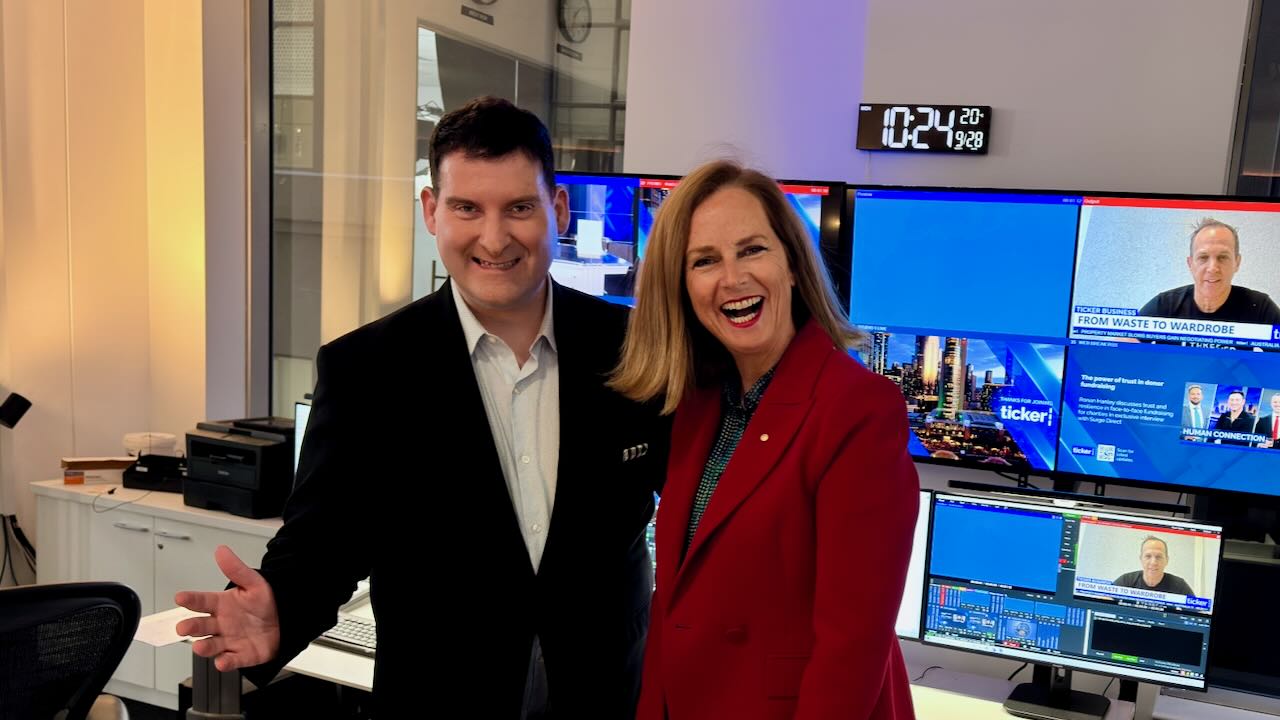
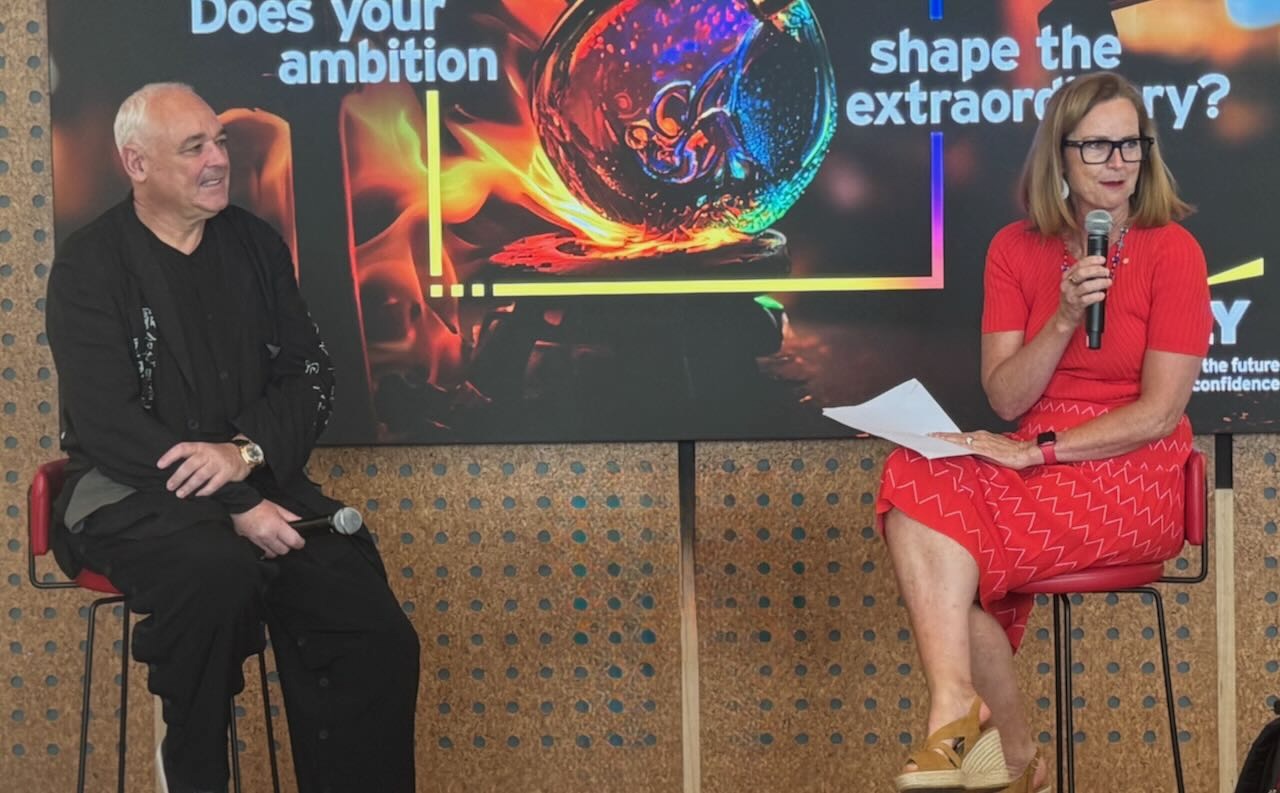
I spent an hour with Laurent Boillon this week, we spoke about the past, present and future.
Laurent won EY Entrepreneur Of The Year for Australia last October. A French baker from Aix-en-Provence who arrived in Melbourne and started Laurent Bakery in 1993, then worked out how to get genuine artisan sourdough into supermarkets without wrecking what makes it good. On the night, Emma Alberici called him a thirty-year overnight sensation, which got a laugh because it is exactly right.
What he said to me was not about bread. It was a worry. He is not sure a young person could build what he built, starting today in this country.
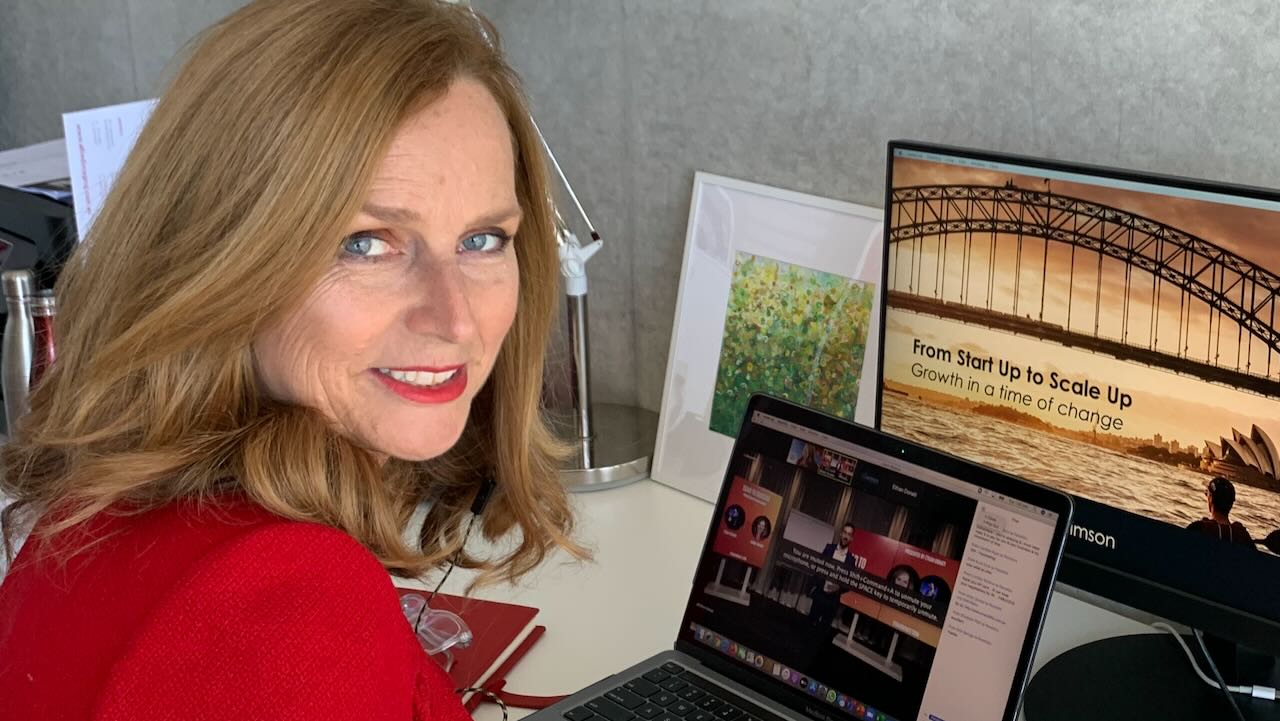
I have been chairing the judging panel for this year's awards, and I have just come out of a room with two dozen of the best entrepreneurs in Australia. So I have been testing Laurent's worry against what I saw. He is partly right, and the part he is right about matters. But what I saw also tells me something has shifted in how businesses get built here, and the founders who understand the shift are doing extraordinarily well.
The 2026 EY Entrepreneur Of The Year Australia winners
Katrina Leslie, founder of the workforce technology company Swipejobs, is the EY Entrepreneur Of The Year for Australia for 2026. She also won the Technology category. The category winners are:
- Social Impact — David Elliott OAM, Australian Age of Dinosaurs Museum of Natural History. A grazier who found fossils on his own country out near Winton and built a museum of international standing around them.
- Consumer — Lou Tandy, Australian Pacific Holdings, APT. The family principal of a travel business her family started in 1927, carrying it through the hardest decade travel has had.
- Emerging — Omar and Zane Sabré, MAISON de SABRÉ. Two brothers who have built a global leather goods label out of Australia and funded the growth themselves.
- Industry — David Riches, GenusPlus Group. Specialist power and communications infrastructure, the unglamorous work the energy transition does not happen without.
- Services — Daniel Tucker AM, Carey Group Holdings. A First Nations-owned and Indigenous-led mining, civil and training group in Western Australia.
- Technology, and the national winner — Katrina Leslie, Swipejobs. AI job matching for shift and temporary work, built out of Australia for the United States and the United Kingdom.
Six very different businesses, and not one of them an overnight anything. Congratulations to all of them, and to every finalist who put an entry in. I read all of them twice.
Here is what I think is really going on in 2026.
1. Everyone is using AI. Almost nobody has rebuilt anything with it
The numbers on AI adoption in Australian small business are all over the place, and the gap between them is the most interesting thing in the data.
The Australian Bureau of Statistics reported in June that 12% of Australian businesses used AI in 2024-25. Intuit's 2026 research says regular use among small and mid-sized businesses has gone from 40% to 69% in eighteen months. The National AI Centre puts SME adoption at around 43%. Deloitte Access Economics found two-thirds of small businesses use AI, but only 5% are what it calls fully enabled.
Those numbers are not contradicting each other. They are measuring different things. Most businesses have someone using ChatGPT to write emails. Very few have redesigned a process around it.
That 5% is where the competitive advantage lives. In the judging room, the businesses that impressed me had not bought AI, they had rebuilt something with it. One had grown revenue by half over two years with the same number of staff, because the technology was doing the work headcount used to do. Another had an engineering team where nearly every code change is AI-assisted, lifting their delivery rate by 62%.
The question to ask yourself is not whether you use AI. Everybody does. It is: what in my business now works differently because of it? If the honest answer is nothing, you are in the 95%.
2. Capital came back, but it went to fewer people
This is the part of Laurent's worry that is dead right.
Venture capital in Australia has recovered from a bruising couple of years. Blackbird closed a $1.05 billion fund in August. But the money is concentrating: in one recent quarter, just 17 deals in the whole country cleared $10 million. Funding to solo female founders and mixed-gender teams has gone backwards over five years, which is maddening and should embarrass the industry.
At the other end, the Institute of Public Affairs published a research note in April titled, bluntly, Australian small business sector in crisis. Corporate insolvencies are running well above pre-COVID levels and are expected to stay there into 2027. Many small businesses are still secured against the family home.
So yes: if you are starting now with an idea and no network, the ladder has fewer rungs than it did in 1993.
But look at what that has produced. Of the entrepreneurs I assessed this year, some of the most impressive had never raised a dollar. One quadrupled revenue in two years, self-funded, with margins going up not down. Another built a technology business past 500 people over two decades without external capital or a co-owner. A third funded six years of development himself before the platform worked.
When capital is scarce and expensive, the businesses that get built are the ones that can fund themselves. That is harder. It is also a far better discipline than a cheap round, and the founders doing it keep their companies.
3. Purpose stopped being a separate conversation
For years, purpose sat in its own section of the business plan, usually near the back, often written last.
That has gone. The strongest businesses I looked at this year do not have a purpose strategy and a commercial strategy. They have one strategy, and the purpose is how it makes money.
A carry brand recertified as a B Corp at 96.9 against a median near 50, and designs products to be repaired rather than replaced, with six-year warranties and ten on luggage, because durability is the brand. A mining services business extends the life of haul truck components, which is both the environmental story and the invoice. A clean energy lender exists because upfront cost is the single biggest barrier to households electrifying, so removing it is simultaneously the mission and the revenue model.
The tell is simple. If you can describe your purpose without mentioning how you earn, you probably have a marketing position rather than a strategy. The businesses where the two are the same thing are far harder to compete with, because a competitor cannot copy the commercial model without taking on the cost of the values.
4. Founders are giving away ownership to keep people
This one surprised me, because it showed up again and again in businesses with nothing else in common.
An engineering consultancy with 45 employee shareholders, many of whom joined as graduates and now own part of the firm. A bedding brand in regional Queensland where all eight employees read the full monthly profit and loss, carry a transparent scorecard and share the profit. A technology company that built a full executive team specifically so the business does not depend on its founder.
The logic is the same in each case. Wages alone no longer hold good people, and a founder who owns 100% of a business that cannot run without them owns a job, not an asset.
The open-book piece is the part I would steal. One founder told me financial literacy is a life skill his people keep forever, which is why everyone sees the real numbers. His team spots problems in the profit and loss before they become crises. That is not generosity, it is a management system, and it costs nothing to start.
5. How customers find you has quietly changed
This is the trend I think is most underestimated by Australian business owners, and it is the one closest to Laurent's worry.
When he started, distribution meant a shopfront and a relationship with a buyer. Then it meant a website and Google. Now a growing share of buying questions are answered by an AI before anyone visits a website at all. Estimates vary and the measurement is young, but the direction is not in doubt: people ask, the machine answers, and two or three businesses get named.
This is where generative engine optimisation, getting cited inside the AI's answer rather than ranked below it, has come from. It rewards the same things good content always did, with sharper edges: answer the question directly in the first line, publish specific numbers and dates rather than adjectives, say who you are and what you do consistently everywhere, and keep it current. Roughly half the content cited in AI answers is less than thirteen weeks old.
The other half of the answer is what Laurent did: he got into the supermarket. The equivalent now is partnership distribution. One of the businesses I assessed puts its valuations in front of ten million bank customers through a single partner; another took a manufacturer from nowhere to market leader in ten months. If you cannot buy attention, borrow someone else's.
So is Laurent right?
Partly. Capital is harder to get, costs are up, insolvencies are elevated, and the regulatory load on a small employer is heavier than it was. Anyone who tells a first-time founder this is an easy market is not being honest with them.
But here is what I keep coming back to. Laurent did not win because 1993 was easy. He won because he spent thirty years solving a problem nobody else had solved, and then had the nerve to take it to a supermarket buyer. The businesses I judged this year are doing exactly that, in a harder market, with better tools.
Five things I would do if I were starting now:
- Pick a problem you have lived. Every strong entry I read came from someone who had worked inside the problem. Not researched it. Lived it.
- Fund it yourself for longer than feels comfortable. The capital concentration is real, and the founders who kept their equity are the ones who did not need the money early.
- Rebuild one process with AI, properly. Not a tool bolted on. One thing that works differently and measurably better.
- Make the purpose the business model, or stop calling it a purpose.
- Borrow distribution. Find the partner with the audience you cannot afford to buy, and be worth their trust.
And if it is to be, it is up to me. That has not changed, in any decade.
Frequently asked questions
Who won EY Entrepreneur Of The Year Australia in 2026?
Katrina Leslie, founder of Swipejobs, was named EY Entrepreneur Of The Year for Australia for 2026, and also won the Technology category. The other category winners were David Elliott OAM (Social Impact), Lou Tandy (Consumer), Omar and Zane Sabré (Emerging), David Riches (Industry) and Daniel Tucker AM (Services).
How many Australian small businesses use AI?
Estimates range from 12% to about 69% depending on what is being measured. The figure that matters is Deloitte Access Economics' finding that only around 5% are fully AI-enabled, using it to run the business rather than to write emails.
Is it harder to start a business in Australia in 2026 than it was?
In some ways yes. Venture capital has recovered in total but concentrated into fewer deals, corporate insolvencies are running above pre-COVID levels, and many small businesses are still secured against the family home. What has got easier is building something small that works without raising money first.
What are the biggest challenges for Australian entrepreneurs in 2026?
Access to capital outside a small number of large rounds, the cost of employing people, and distribution. Customers increasingly get their answer from an AI before they ever reach a website.
I chair the independent judging panel for the EY Entrepreneur Of The Year Australia awards. The winners above are the panel's decision, announced on 22 October 2026. Where a business is described but not named, that is deliberate, because those details came from confidential entries.
If you would like this material for your next leadership event, enquire about Naomi speaking.