
Thank you to George Stern. He shared an infographic on the habits of people who never seem stressed, and it made me stop and consider what I do each day. When I looked closely at my own routine, I realised how much of my calm comes down to a handful of simple habits. Almost none of them cost a cent.
In my last post, I wrote about the difference between stress and distress. Stress can give us momentum. Distress is when you can't sleep, you're worried all the time and no amount of passion will push you through. Somewhere between the two sits a feeling almost every business owner and leader knows well: overwhelm.
Feeling overwhelmed: too much to do, not enough time
Overwhelm usually sounds like this: there's too much to do and not enough time to do it.
But everyone has 24 hours. Nobody gets more. As I say in my Time Management Strategies episode, we can't manage time itself, because it passes at the same pace for all of us. What we can manage is how we allocate it: our energy, our focus, our decisions and our priorities.
That means learning what to say no to. Success comes from what you say no to, not just what you say yes to. I talk more about this in What to Say No To, and in How to Get More Time I share the love/loath list I use to decide where my hours should go.
When I wrote Live What You Love, I wrote about making powerful choices about where we spend our most valuable resource. More than a decade on, that resource is under more pressure than ever.
Why AI isn't saving us time (yet)
We were told AI would give us our time back. For many of us, it hasn't. What I'm seeing with founders and business owners is that they're now doing even more, taking on projects they never thought possible.
The research is starting to show the same pattern. A study published in Harvard Business Review in February 2026 found that employees using generative AI didn't work less. They worked faster, took on broader projects and often stretched work into more hours, without anyone asking them to. ActivTrak's 2026 State of the Workplace report found that after AI was adopted, time spent on email more than doubled, and time on chat and messaging rose by 145 per cent. And in Korn Ferry's Workforce 2026 research, more than half of employees said AI had increased the number of tasks expected of them.
AI is a powerful tool. But if we fill every hour it saves with more work, overwhelm grows. It's a leadership challenge before it's a technology one. Use the time AI gives you to think, not just to do more.
So what do I do? Here are the eight free habits that stop me from feeling overwhelmed.
8 free habits that stop me feeling overwhelmed
1. Get sunlight before you get busy
As soon as I wake up, I get outside and into the sunlight. Most mornings, that means walking the dog. It's the first thing I do, before I open my inbox and before anyone else's priorities arrive.
Your inbox will never be empty. The morning light won't wait.

2. Breathe before you begin
I do five minutes of breathwork every morning. It's the fastest way I know to reset, and all it takes is a quiet corner.
There's good research behind it. A Stanford study published in 2023 compared five minutes of daily breathwork with the same amount of mindfulness meditation over a month. The breathwork, particularly exercises with long, slow exhales, produced a greater improvement in mood.
My own routine goes a step further. After my breathwork, I do a three-minute ice bath, then another five minutes of breathwork. If you'd like to try cold exposure without the equipment, finishing your shower with a burst of cold water is a free place to start. Please check with your GP first if you have a heart condition or any health concerns, because cold water puts real pressure on the body.
3. Walk wherever you can
I walk to the gym. I walk the dog. And after meals, I walk for ten minutes. It's my thinking time, and some of my best ideas have arrived on foot rather than at a desk.
It's good for the body too. Research reported by CNN found that when people went for a short walk after eating, their blood sugar rose and fell more gradually than when they sat or stood. If you don't have a gym, the walk is still the free part. Build it into how you get places, not just into your exercise.
4. Coach yourself not to rush
This is the one I work hardest at. I've admitted before that I was always rushing, and that I wish I'd slowed down. So now I coach myself not to rush.
I leave space between appointments on purpose. That space is where the real work happens. I get the follow-up actions done, think through the next steps, send the confirmation notes and get to my next appointment on time. Often with a peppermint tea in hand.
A diary packed back to back looks productive, but it pushes all the follow-up into your evening. That's where overwhelm builds. White space isn't wasted time. I've written before about the ROI of doing nothing, and it's one of the best investments a leader can make.
5. If it matters, put it in the calendar, and tick it off
If something matters, give it a time slot. That includes the walk, the breathwork and the time to think. Don't count on memory or leftover time to make it happen, because there is never any leftover time.
I use reminders for everything, and I love ticking things off. It's one of the small joys of my day. When an idea pops into my head, I write it down straight away rather than trying to hold it in my brain. I keep everything in one place, so less slips through the cracks. And for the things that repeat, such as bills and regular bookings, I set them up once so I never have to think about them again. You'll find more ideas in my productivity hacks.
This works at home too. A quick check-in each week with your team and your family means everyone knows where you are, and there are fewer surprises.
6. Have something to look forward to
When there's too much to do, overwhelm makes everything feel like an endless list. Something to look forward to changes that. It could be a goal, a holiday or an experience with family and friends.
My daughter taught me a simple framework: one big project each year, something to look forward to every two months, and four habit changes a year. Put those things in the calendar, so they happen.
The research backs this up. A study of 1,530 Dutch adults found that people planning a holiday reported more happiness beforehand than people who weren't going away, possibly because they were anticipating it. After the trip, the two groups were generally no different. The joy was in the looking forward. So plan the next thing before the last one fades.
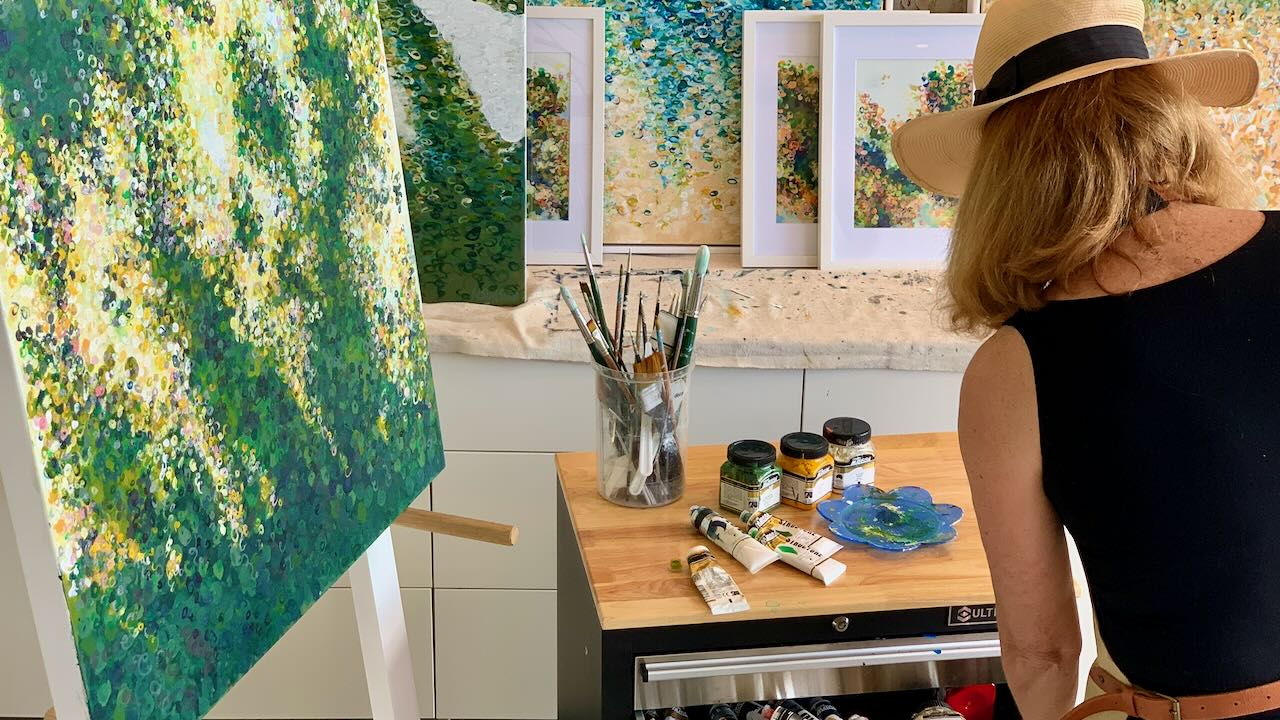
It doesn't have to cost money. A picnic with friends, a family dinner, a bushwalk, a day at the beach or a fun run you're training for all count. After all, I built RedBalloon on the belief that experiences matter.
7. Give your body a routine
I eat at regular times and I don't snack. My plate is roughly a third protein, a third fibre and a third carbohydrate, and I start the day with a high-protein breakfast.
My body craves routine, and routine makes me feel productive. When my meals are predictable, my energy is too. I'm not making decisions about food all day, which frees up my thinking for the things that matter. This is what works for me. Everyone's body is different, so if you're changing how you eat, talk to your GP or a dietitian.
8. Choose your top three, and close the day well
Each morning, I decide the three most important things for the day. Everything else becomes extra, not urgent. It's a simple test, and it stops me treating every email as an emergency.
At the end of the day, I have a clear finish. For me, that's the sauna. It isn't free, so if that's not an option for you, a warm shower, a short walk or ten minutes preparing for tomorrow will do the same job. Write tomorrow's list, lay out what you need, and go to bed with a clear head.
Everyone has 24 hours. Allocate them.
None of these habits is a quick fix. They work because I do them consistently, and together they stop ordinary pressure from turning into overwhelm. I share more of my daily non-negotiables in another post.
My motto has always been "If it is to be, it is up to me." That applies to how we look after ourselves too. Nobody else will protect the space between your appointments, your morning walk or the holiday in your calendar. You have to allocate that time yourself, and say no to the things that would take it.
Which habit will you start with this week?
If overwhelm has tipped into distress for you, please talk to someone. Your GP is a good place to start, and you can read more about the difference between stress and distress here.
Frequently asked questions
How do I stop feeling overwhelmed at work?
Start by accepting that your to-do list will never be finished. Choose the three most important things each day, leave space between meetings to follow up and think, and put what matters into your calendar. Small daily habits such as a morning walk and five minutes of breathwork help you reset before the day gets busy.
Why do I feel like there's never enough time?
Everyone has the same 24 hours. The feeling of never having enough time usually comes from saying yes to too much. Time can't be managed, but your priorities, energy and decisions can, and learning what to say no to is one of the most powerful ways to get time back.
How do I prioritize tasks when everything feels urgent?
Each morning, pick the three things that matter most that day. Everything else becomes extra, not urgent. Keep one list, use reminders so nothing relies on memory, and set up repeat tasks once so you don't have to think about them again.
Is AI making us more overwhelmed?
It can. Research published in Harvard Business Review in 2026 found employees using generative AI didn't work less. They worked faster, took on broader projects and often worked longer hours. AI can save time, but only if leaders choose to use that time to think rather than simply to do more.
Why does having something to look forward to help?
Research on holidaymakers found that people reported more happiness before a trip than people who weren't going away, possibly because they were anticipating it. Having a goal, holiday or experience with family and friends in the calendar gives you something beyond the to-do list to focus on.