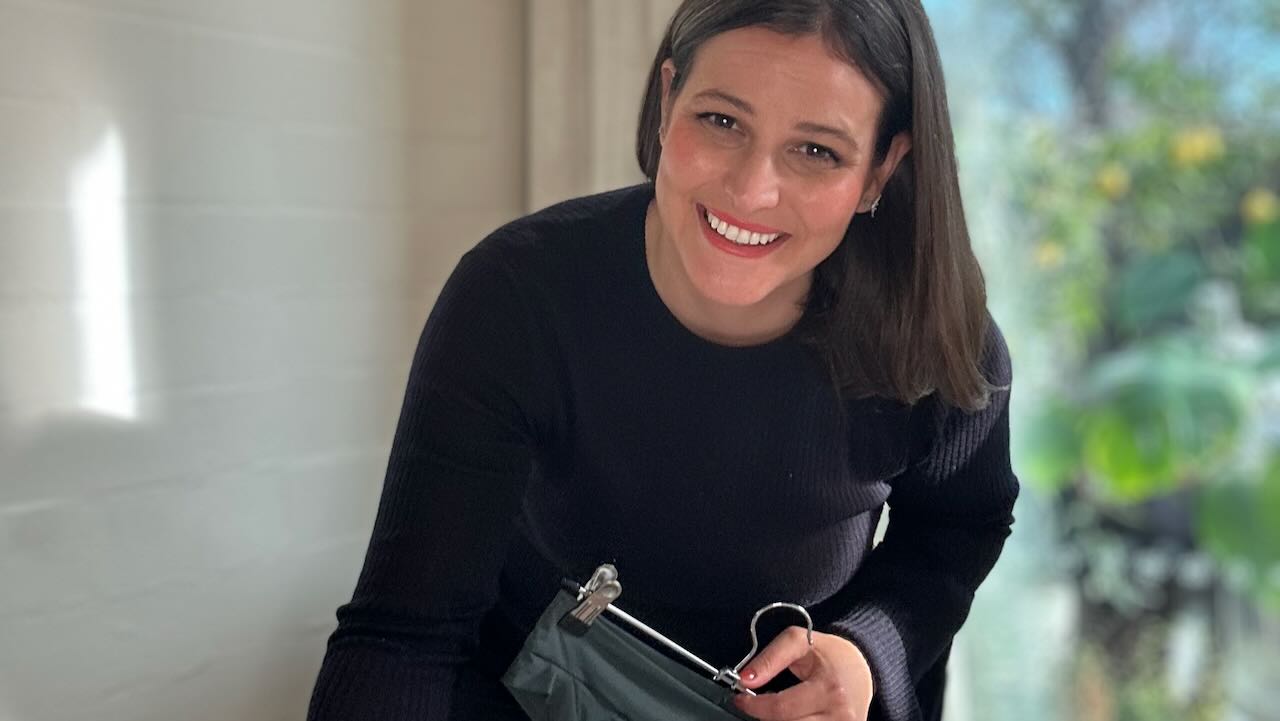

Most mental health technology is built for the person who is struggling. Shane Muller built his for the person standing next to them.
That is the whole idea behind SafeWatch, and the moment he explained it I understood why he had spent five or six years in research before launching anything. His argument is simple: if you take carers out of the equation, hope drops for everyone who is struggling. So support the carers first.
And when he says carers he means two groups. There are the paid professionals — psychologists, social workers, people inside NGOs. And then there is what he calls the relational carers, this enormous unlabelled army who do not walk around calling themselves carers at all. They walk around with the label mum. Sister. Dad.
They are the ones there at the hours of the day and night when someone needs them. They read the signs, the silences, the face. They are, as Shane put it, the most critical early warning net a person has.
The platform is built on a principle I have not been able to stop thinking about since: it takes a whole village to do life. We all know the proverb about raising a child. His research says it does not stop when the child grows up. You need a village your entire life.
He brought me three questions, and they got steadily harder.
Trust Is a People Game
His first question was how you move from building customer trust to building community trust.
How to Build Trust as a Small Business
Start with a stakeholder map, because they are not one group. Work out every group who touches this, and then ask what job you are doing for each of them. Often the most valuable people are the ones who will never be your customer — they simply speak well of you, or speak to the need itself.
Here is how we built trust at RedBalloon, and it is not sophisticated. Real people doing business with real people.
It meant being authentic when we got it wrong. If we made a mistake we said we made a mistake. If something was not our best work, we said so. Interestingly, I never put my face on the website — I think I am on the about page somewhere. It was never about a founder photograph. It was about being willing to get out from behind the website: networking events, community events, associations. Listening, talking, understanding. And our own team members going out and doing the experiences, then saying honestly what they thought.
Trust is a people game and it cannot be outsourced to AI. It comes from authenticity, from realness, and from visibly demonstrating that you are listening.
Community Building Starts Before You Need It
Community lands hard with me here, because when something happens in a community we are so often unprepared. As Australians we are not very good at grief. We have no shared programme for it — different cultural traditions handle it differently, but there is no common script for what we do. And the result is that the person in the middle ends up isolated, and so does everyone around them.
We all think we are alone until we are not, or until we need somebody. Loneliness and isolation are getting worse, not better. In an age when people believe they have a friend online, how do you know it is real? How do you know what is being said to you is real?
Shane's response was that this is exactly the work SafeWatch does, and that the absence of community tends to show up in a crisis — when it did not need to.
That is right, and it is the whole case for community building as a discipline rather than an accident. You build the village before you need it. The same is true in business: the relationships that carry you through a bad quarter are the ones you built in a good one.
The Dollars Are an Outcome, Not the Reason
His second question was whether I had ever had to balance building something meaningful against the commercial success of the business, and how I kept stakeholders aligned through it.
I have, and it was uncomfortable.
In the early days of RedBalloon I worked closely with someone trained as an accountant, and the conversation was always about the financial result. Any early-stage budget is arbitrary anyway — you look at a number and think, well, we could probably do that. It is not based on anything. If the number came in green it was amazing. If it came in red, the question was what I was going to do to fix it. Confronting conversations, and they did not make me feel good about myself.
What I found was that when I was chasing the dollar, I felt small.
How to Balance Purpose and Profit
Money makes the world go round, and I am not romantic about that. But the thing I had to remind myself of, over and over, was the impact of the work. The small businesses getting customers because of what we did, which drove their livelihoods in their regional town or their suburb. The grandfather who got to spend an afternoon with his grandchildren because all he wanted was time together and we made it easy.
So I stopped using dollars as the measure of success and started using how many people we had affected. And the dollars followed. They do. Focus on the impact and the money arrives; focus on the money and you get neither, or you get the money and feel hollow about it.
That is also how you keep stakeholders aligned, because you need a purpose broad enough to hold all of them. Ours is that we shift the way people experience life. A team member who learned something they did not know — we shifted their experience. Someone in an audience. A business owner listening to a podcast. Suppliers, contractors, technology partners. It has to be big enough to include everyone, and then you validate it by listening and understanding the impact you are having.
I remember someone saying to me that if you have not got the dollars you cannot change the world, and they were right. You have to make a business financially successful in order to provide services and employment. But the dollars are an outcome. They are not the reason. Always stick to the reason why.
Something Shane mentioned deserves repeating here, because it is the same principle applied to product design. SafeWatch did not only put health practitioners at the table to architect the service — they brought in people with lived experience to help design it. That is what listening looks like when you mean it.
Stay Close Enough to Feel the Vibe
His third question was the biggest. If trust became Australia's next competitive advantage — not just in business but in communities, schools, families, the whole fabric — what would leaders need to start doing differently today?
They could stop lying. They could stop changing policy on the fly. They could have a bit more empathy for small business owners, who are the backbone of this country, who provide more employment than anybody, and for whom nothing has been made easier.
Trust comes from being transparent. It also comes not from wearing your heart on your sleeve but from authentically thinking about other people and how you might make the world better for them.
What upsets me — and Shane got me properly onto a soapbox here — is that people in government have rarely sat in a small business owner's shoes. They do not know what it is to put your livelihood on the line every single day, or that we take that risk knowingly. Not many business owners I know are getting rich right now.
How Leaders Stay Close to Their Customers
I am genuinely concerned about who people are listening to, and why.
There was a time when you could put an advertisement on television on a Sunday night and ninety per cent of the country would see it, and that was your product launched. We all watched the same things — the Leyland Brothers, that very Australian outward-bound adventure show — and it was unifying. Now everybody has their own individual media and we have no idea what messages anyone is receiving.
So the question for anyone leading anything is: how are you being informed, and is it broader than a single channel?
We do this in business constantly. We listen to one customer and treat it as the truth. It is not the truth. It is one opinion, and it is an interesting insight. What did I learn from it? What is the other view? You cannot please everyone, so you had better have a real understanding of the key issues for each stakeholder group rather than the loudest one.
And as businesses get bigger, we drift further from the customer. So the one thing I would say to any leader or director: how are you keeping your finger on the pulse? It is not the research study. It is not what you are told in a report. It is how you are getting the vibe of the thing. Big ears and deep curiosity — that is the job. And always remembering that our view is not the only view.
Shane is not there yet, and he knows it. This is a long piece of work. Twenty-five years in, we have delivered more than five million customers to small businesses around Australia, and I certainly did not see that from where I started. It is a marathon. But it is a marathon worth running.
Also thanks to season sponsor Odoo.com to learn more click here.
Frequently Asked Questions
How do you build trust as a small business?
Be real, and be visible. Admit mistakes plainly when they happen, get out from behind the website to community events and associations, and demonstrate that you are listening rather than claiming that you are. Trust is built by people and cannot be outsourced to technology.
What is the difference between customer trust and community trust?
Customer trust is earned through the transaction and what follows it. Community trust extends to people who may never buy from you but who speak about you, or about the need you serve. Map every stakeholder group and ask what job you are doing for each — the advocates often matter more than the buyers.
Why does community building matter for a small business?
Because the absence of community shows up in a crisis, when it did not need to. Relationships built in a good quarter are the ones that carry you through a bad one. Community building is a discipline you practise before you need it, not a campaign you run when you do.
How do you balance purpose and profit in a business?
Treat the dollars as an outcome rather than the objective. Measure success by the impact you are having and stay connected to real customer stories, because that is what tells you whether the purpose is real. A business still has to be financially successful in order to employ people and deliver anything at all — but profit is the result, not the reason.
How do you keep different stakeholder groups aligned?
Choose a purpose broad enough to include all of them, then validate it by listening. If your purpose only describes what you do for customers, it will not hold your team, your suppliers or your partners. Ours was about shifting how people experience life, which was wide enough to mean something to everyone.
How do leaders stay close to their customers as a business grows?
Deliberately, because distance is the default. Reports and research tell you what has been filtered upward. Keep a direct channel to real customers, read or listen to their stories yourself, and treat any single piece of feedback as one interesting opinion rather than the truth.
Listen to the full episode with Shane Muller of SafeWatch
If anything in this conversation is close to home for you, support resources are listed in the show notes.