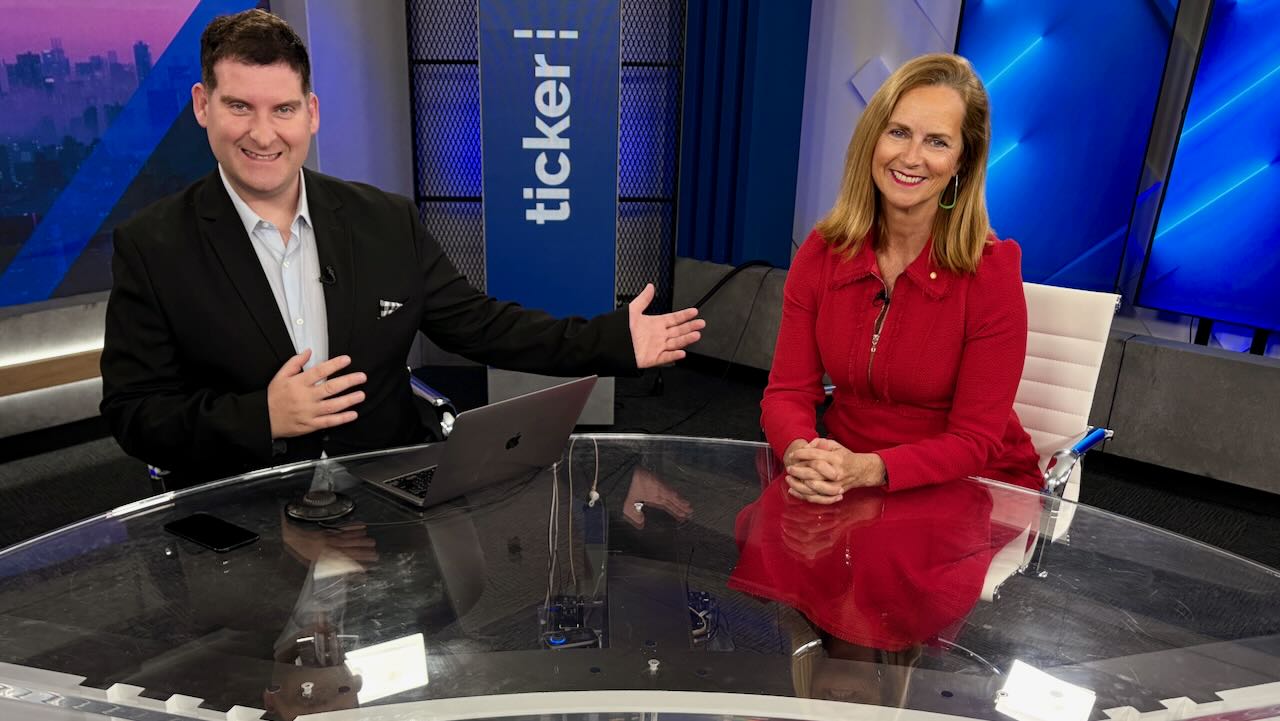

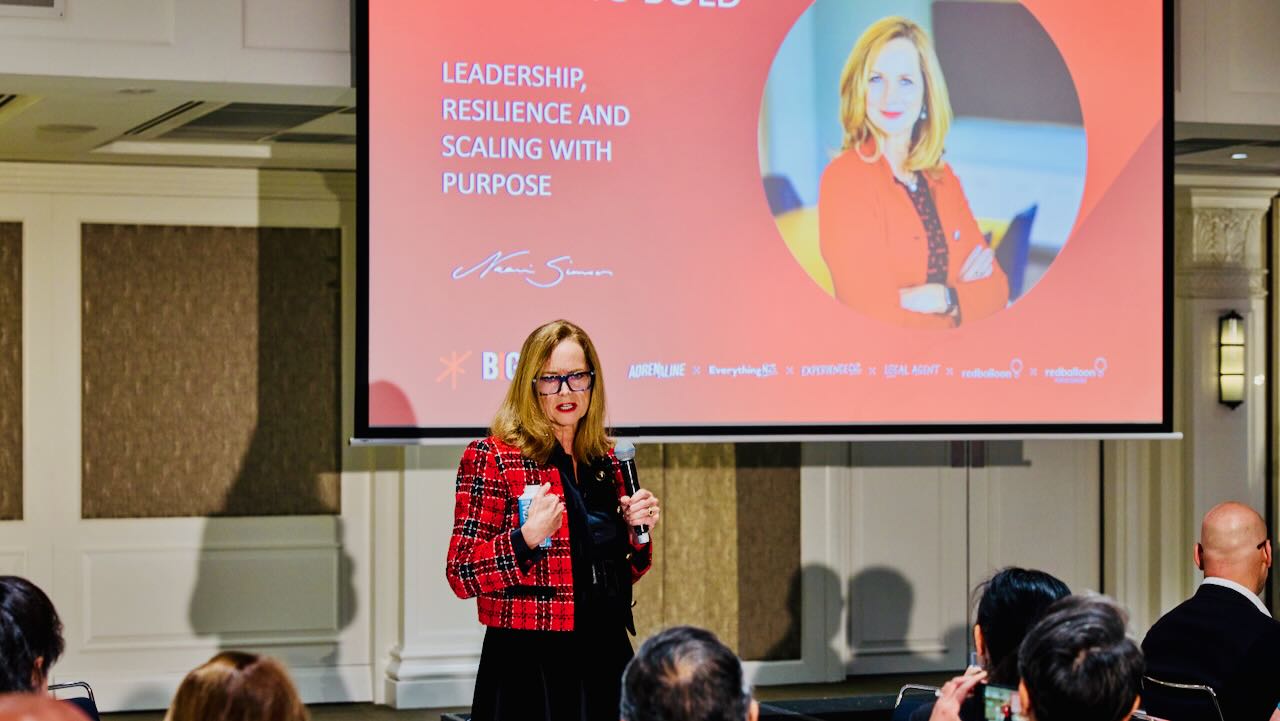
A few weeks ago I was standing in the wings of a Sydney ballroom, waiting to walk on stage in front of about 900 business owners. The MC was warming the room, the lights were doing that particular blue-to-amber shift I have come to love, and I could hear the audience laughing at something I could not quite make out. In that moment, a woman beside me — a founder I had never met before, who was speaking right after me — leaned over and said, ‘I have been sitting on a decision about my co-founder for six months. I think I just worked it out listening to the panel before lunch.’
She had not solved it in a webinar. She had not solved it in her inbox. She solved it because she was in a room, surrounded by people grappling with the same kinds of questions, and something in the air shook her thinking loose. I have seen that moment a hundred times now, and it is the reason I keep saying yes when people ask me whether in-person events still earn their place in a 2026 calendar. They do. And the gap between what happens in the room and what happens on a screen is widening, not closing.
What happens in a conference room that cannot happen on a screen
The short answer: Business conferences still matter in 2026 because they compress relationship timelines, create spontaneous cross-industry collaboration, and generate a quality of decision-making clarity that no virtual format has yet replicated. A single hallway conversation at the right event is worth four months of LinkedIn exchange.
When I walk on stage, I am reading the room within the first thirty seconds. Where are the arms folded? Who is leaning forward? Which table is whispering, and is that the good kind of whisper or the ‘I have heard this before’ kind? Every keynote I deliver is a slightly different keynote because of what I sense in that opening minute. You cannot do that through a webcam. You can perform to a camera, but you cannot have a conversation with it.
The magic of a conference, though, is not really about the stage. It is about the twenty minutes after the stage. It is the queue at the coffee cart, the unscheduled chat in the hallway, the dinner where someone you have never met tells you something that reframes a problem you have been carrying for months. I have lost count of the times a single hallway conversation has changed a decision I was about to make at Big Red Group, or sparked a question I took straight back to my team.
That is the part the calendar invite never captures. Curiosity, real curiosity, needs proximity. It needs the slightly awkward small talk before the real talk. It needs eye contact, and shared coffee, and the small generosity of someone saying, ‘I tried that and it did not work, here is why.’ Screens compress information. Rooms expand thinking.
Business conference ROI: in-person vs virtual in 2026
I am an optimist, but I am also a numbers person. If conferences only delivered warm feelings, I would not keep recommending them to the founders I mentor. The evidence in 2026 is consistent across the major industry bodies — the Events Industry Council, PCMA, and Business Events Australia — and it points the same direction.
The Australian business events sector is now contributing well over $36 billion in direct expenditure annually, and the recovery curve since the disruption years has not just returned to baseline, it has reset expectations about what people want from a live gathering. They want depth. They want curation. They want to leave with one idea that is worth the airfare.
Metric: Lead-to-meeting conversion
- In-person events: Higher (est. 40–60% lift)
- Virtual events: Moderate
Metric: Attendee satisfaction scores
- In-person events: Consistently higher
- Virtual events: Variable
Metric: Knowledge retention (48 hrs post-event)
- In-person events: Stronger, multi-sensory engagement
- Virtual events: Lower
Metric: Relationship depth formed
- In-person events: Deep, shared physical context
- Virtual events: Surface, screen fatigue factor
Metric: Spontaneous collaboration and networking
- In-person events: High — the hallway effect
- Virtual events: Rare
The insight underneath the numbers is the one I keep coming back to. Conferences compress relationship timelines. A coffee at a conference is the equivalent of about four months of polite LinkedIn exchange. For founders building businesses where trust and judgement matter — which is almost all of us — that compression is the return on investment. If you want to understand how to show up in those rooms as a leader, your leadership style shapes every interaction you have.
Why business conferences are where real innovation begins
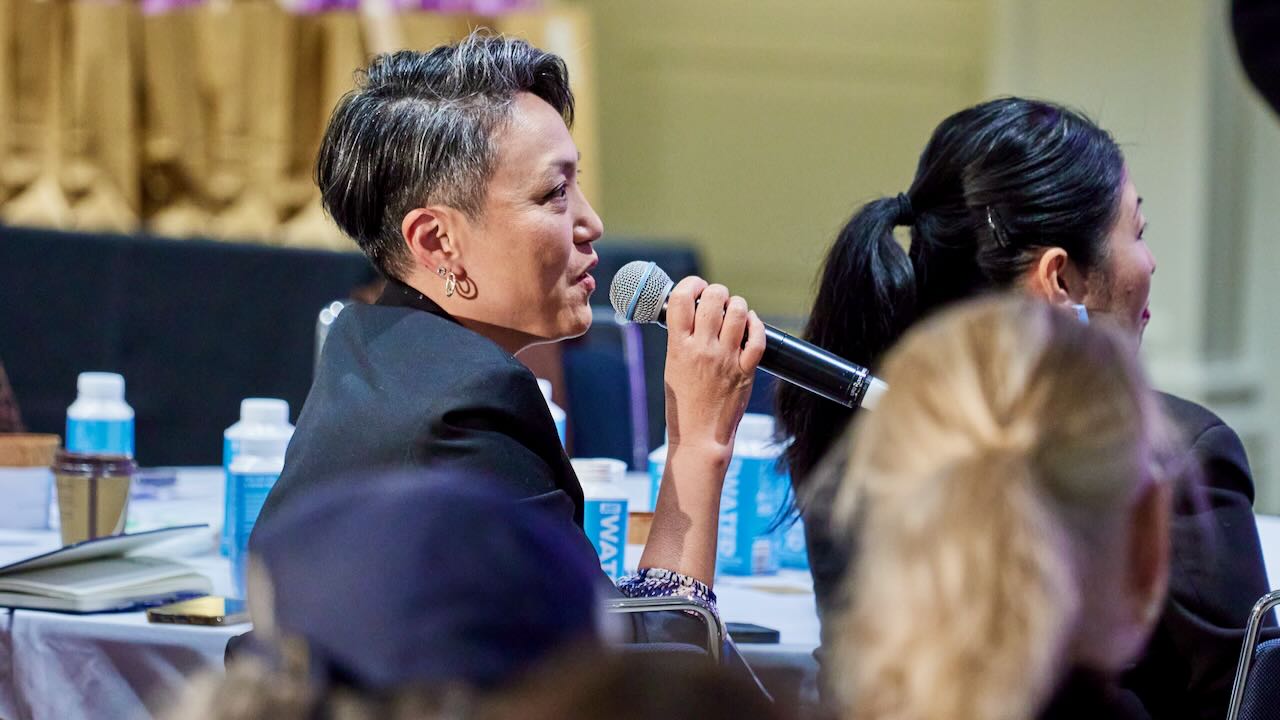
Innovation does not arrive in a quiet room with one person staring at a laptop. It arrives at the intersection. It arrives when a founder is sitting next to an academic who is sitting next to a corporate marketing lead who happens to mention something about consumer behaviour in regional Queensland. Three industries, one table, one new idea.
I have walked out of conferences with notebook pages full of things that had nothing directly to do with my session, and everything to do with the businesses I help guide. Some of the most useful thinking I have brought back to the team has come from speakers in completely unrelated fields — healthcare, defence, agriculture, hospitality. Curiosity and continual learning are not personality traits, they are practices. And those practices need rooms full of people who do not look like you, do not think like you, and do not work in your industry.
This is what I mean when I talk about how intentional leadership shapes team culture. Choosing the rooms you sit in is one of the most leveraged decisions you make as a leader. How you show up in those rooms — the questions you ask, the impressions you leave — is also the foundation of your personal brand. Not in the abstract sense. In the actual sense: those rooms shape the next twelve months of your thinking and your reputation.
What I look for when I choose which events to attend
I get invited to a lot of events. I cannot say yes to all of them, and I have learned the hard way that a poorly curated conference is worse than no conference at all. Here is the lens I use, in roughly this order.
First, who else will be in the room. Not the headline speakers — the audience. A great speaker list with a thin audience is a podcast you could have listened to in the car. Second, the diversity of industries represented. If everyone in the room does what I do, the conversations will reinforce what I already know. Third, whether the organisers have built in breathing room — long lunches, real breaks, evening gatherings that are not just branded drinks. Fourth, whether the event has a clear point of view. The best conferences are opinionated. They are trying to say something. The mediocre ones are just filling a venue.
When I am invited to speak, I apply the same filter. You can see my keynote speaking topics and approach for context, but the short version is — I say yes when I can sense the organisers care more about what the audience leaves with than how the run sheet looks.
The Australian business events landscape in 2026
The Australian conference and events industry in 2026 looks materially different to where it sat three years ago. Capacity has returned, but appetite has shifted. Hybrid formats are still around, and they have their place, but the leaders I speak with are increasingly clear that the virtual layer is a supplement, not a substitute.
Business Events Australia data through 2026 points to strong domestic demand, particularly from the small and mid-market business segment — exactly the audience I write for. There is a renewed willingness to travel interstate for the right gathering, and a sharpening of expectations about what justifies that travel.
The events that are thriving are the ones that take curation seriously. The ones struggling are the ones that treat the agenda as a checklist rather than a conversation.
Five questions to ask before your next conference investment
- Who else will be in the room, and would I want to sit next to them at dinner?
- What is the event’s track record for genuine connection, not just attendance numbers?
- Does the agenda create space for spontaneous conversation, or is every minute scheduled?
- Will I leave with one insight that changes how I think about my business?
- Could I get the same value from watching the recording later?
The answer to that last question is almost always no. And that is the point.
Frequently asked questions
Are business conferences worth it in 2026?
Yes. In-person business conferences consistently outperform virtual formats on lead quality, relationship depth, knowledge retention, and networking outcomes. The real question is not whether to invest in conferences, but which events deserve your time and budget — and that comes down to the quality of the room, not just the speaker list.
What is the ROI of business conferences compared to virtual events?
In-person events generate an estimated 40–60% lift in lead-to-meeting conversion versus virtual equivalents, alongside consistently higher attendee satisfaction scores and stronger knowledge retention at 48 hours post-event. For complex B2B relationships that require trust, the cost-per-relationship formed at a well-curated conference is typically lower than alternatives.
What makes a business conference worth attending?
The best business conferences curate a genuinely diverse room, build in unstructured time for real networking conversations, and have a clear editorial point of view. If every minute is scheduled and there is no breathing room, the hallway conversations — where the real value lives — never happen.
How do in-person events and conferences drive business networking?
A coffee conversation at a conference compresses roughly four months of LinkedIn exchange into twenty minutes. Shared physical context, eye contact, and the spontaneous nature of hallway encounters create the kind of trust that digital communication cannot replicate at the same speed. For founders building businesses on relationships, that time compression is the core ROI.
How should I choose which business conferences to attend in Australia?
Start with the audience, not the agenda. Who else will be in the room? Is the curation intentional? Does the format create space for real conversation, or is it a wall-to-wall run sheet? The best Australian business conferences in 2026 are the ones where you could not have got the same value from watching the recording later.
How do in-person events drive business innovation?
Innovation rarely happens in isolation. Business conferences create structured serendipity — putting you in a room with people from different industries, disciplines, and perspectives. That cross-pollination of thinking is extraordinarily difficult to replicate in a virtual environment, and it is why the most useful insights often come from speakers in fields completely unrelated to your own.
Closing thought
That founder I met in the wings in Sydney — the one who worked out what to do about her co-founder during a panel — emailed me two weeks later. She had made the call. It was the harder of the two options in front of her, and she said she would not have had the courage to make it without the conversations she had at the event.
That is the part no spreadsheet captures. Courage is contagious in a room. Clarity is contagious in a room. The right gathering, at the right moment in your year, can shift a decision you have been carrying for months. In 2026, with so much of our working life mediated by screens, intentional in-person presence is one of the most undervalued growth practices I know.
If you are curating an event and thinking about speakers, or you are a founder weighing up which gatherings deserve your time this year, I would love to be part of the conversation. You can explore my keynote speaking topics and approach, have a listen to the Handpicked with Naomi Simson podcast, or dive into what customer obsession really looks like in practice and my books on entrepreneurship and purpose. Whichever room you choose next, choose it on purpose.