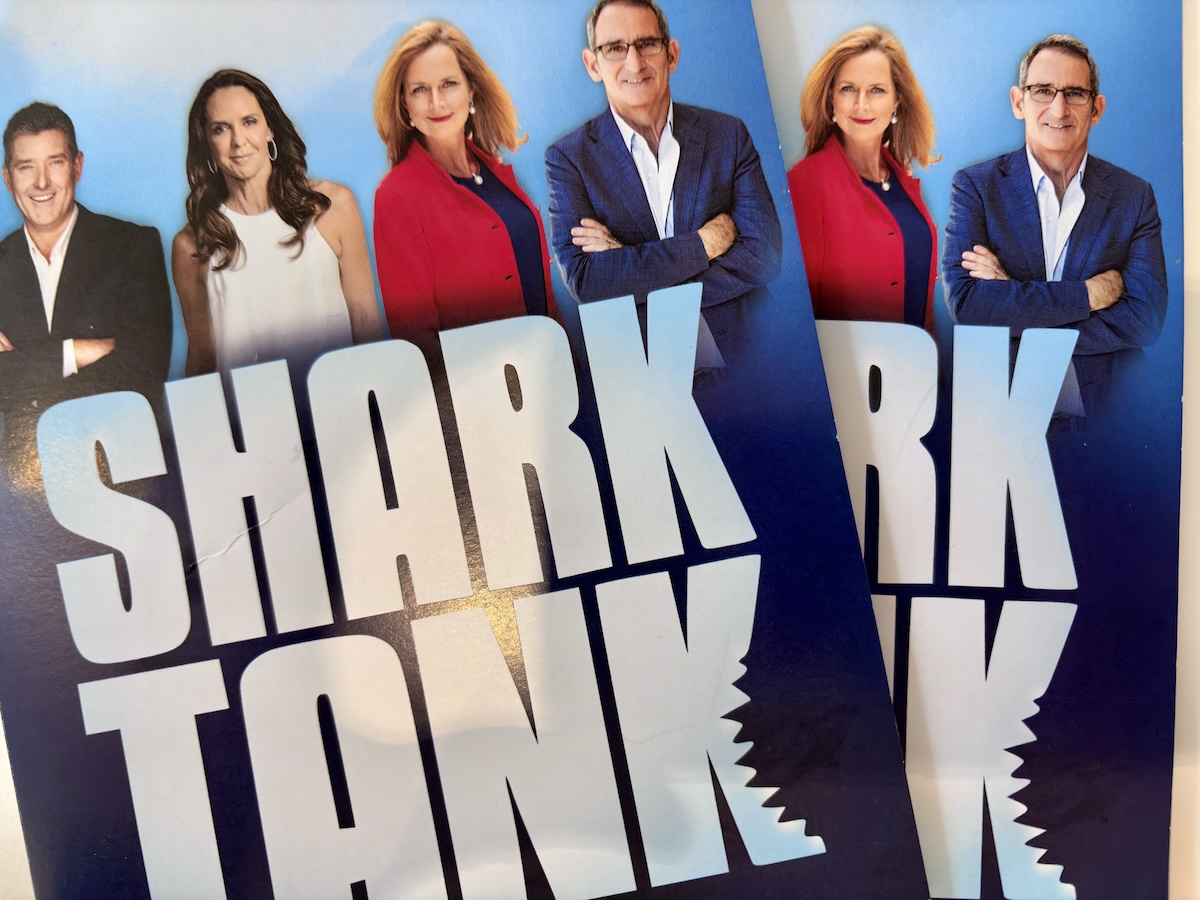
Four seasons in the Shark Tank taught me more about angel investing than any textbook. Pitch after pitch, I heard founders tell me their business would change the world. Some of them were right. Many were not. And the lesson that has stayed with me longest isn't about picking winners. It's about getting out.
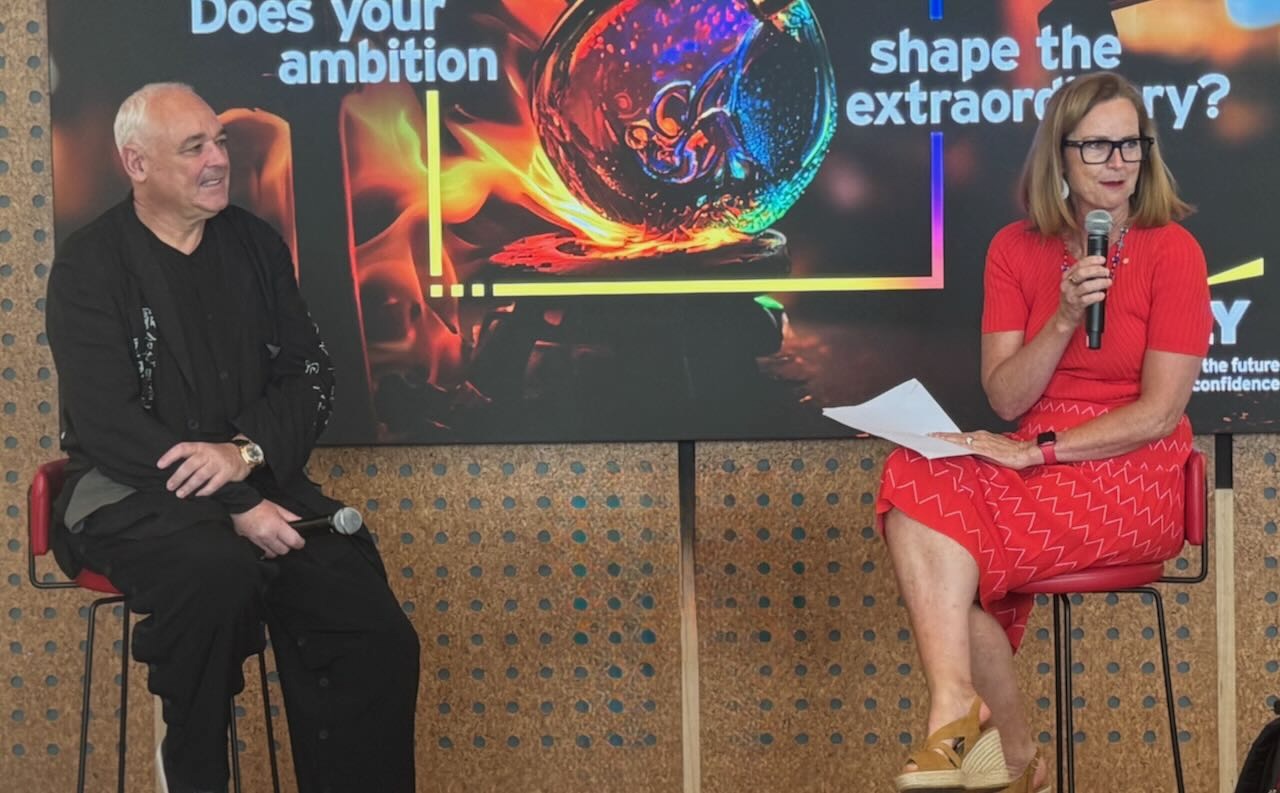
I sat down with Scott Winter on his podcast From Founder to Angel to talk about exactly that: what happens after the handshake, and why the exit matters more than the entry.
What Shark Tank taught me about angel investing
On television, an investment looks like a handshake and a hug. In reality, the handshake is where the work starts.
Looking back over the businesses that came before us, I'd roughly split them into thirds. A third didn't really want investment at all. They wanted the publicity, and that's fine; the show is a wonderful platform. Another third had numbers that didn't stand up once we looked closely. And the final third went into a genuine due diligence process.
I'm not alone in noticing how few on-air deals become real ones. A Forbes analysis of the US version of the show found that across seasons 8 to 13, about half of the agreed deals fell through, and another 15% were changed afterwards. Due diligence is where an exciting pitch meets the facts.
The truth about angel investing returns
Of that final third, the businesses that received some form of investment or a loan from me, about a third didn't make the journey. With some, I got my money back. One or two did well enough to cover the rest.
That pattern isn't bad luck. It's how angel investing works. The Angel Capital Association notes that over half of early-stage investments typically fail to return any capital, while the top 10% usually deliver 85 to 90% of all the cash proceeds. Large-scale research published by the US National Bureau of Economic Research, led by Johan Karlsen and David Robinson, reached a similar conclusion: total losses are common, and the median angel investment loses money.
So if you're thinking about writing your first angel cheque, three things matter:
- Only invest what you can afford to lose. Assume any single investment could go to zero.
- Build a portfolio, not a bet. Returns come from the few that succeed, so you need enough investments for one of them to be the one.
- Back people you can work with. You'll be in this relationship for years, through the good months and the hard ones.
The hardest part of angel investing is getting out
Everyone talks about getting in. Nobody talks about getting out. And yet the hardest thing for any angel investor is the exit.
With a startup chasing venture capital, there's a clear path: a bigger round, a trade sale, perhaps a listing. But most small businesses don't follow that path. There's no easy, natural exit for a profitable, well-run small business that isn't going to be the next unicorn. Your money can be tied up for a very long time.
This isn't only an investor's problem. It's every owner's problem too. VistaPrint research of 510 Australian small and medium business owners found that 31% plan to retire within five years, and 45% of those considering an exit have no succession or sale plan at all. PwC research points to the scale of what's coming: 1.4 million Australian business owners set to retire by 2036, and one-third with no succession plan.
That's a lot of businesses, and a lot of investors, without a way out.
Why a management buyout is often the best exit
My most successful investments had one thing in common. The founders, or someone working with them inside the business, bought me out.
A management buyout makes sense for a small business. The people buying it already know the customers, the suppliers and the culture. They're invested in its future because it's their future. And the business doesn't have to open its books to a competitor to find a buyer.
Andy Hough, a partner at Pitcher Partners, makes the same point: for many owners, existing management is the first option, and confidentiality isn't an issue because the team already knows the business. He also flags the catch. Management often doesn't have enough capital to fund the full price, so the seller may need to offer vendor finance over several years.
For an angel investor, that's worth knowing from day one. If the most likely buyer of your stake is the team, the structure that lets them buy you out needs to be there from the beginning.
An exit strategy for small business starts on day one
When I look at any investment, I look very carefully at the shareholders' agreement. Do they have one? What does it say? Can somebody buy the others out, and on what terms? Those questions feel awkward at the start, when everyone is excited. They're far more awkward when you need the answers.
The other part of any exit strategy is a business that can run without its founder. Gemma, who worked alongside me for 23 of my 25 years at RedBalloon, came to me about eight years in and said, "You're going to kill this baby because you love it so much. It has to learn to survive on its own." It took me another two years, but I replaced myself, and she became CEO.
It cannot be about the personality. If a business only works because of its founder, it isn't really a business yet. Andy Hough notes that a founder who has trouble letting go can cause problems for everyone after a sale. So set the framework, agree on what the results need to look like, and then leave your people to it. Just because they do things differently doesn't mean they're wrong.
As an angel, you influence by asking
Whether I'm an investor or a director, I've learned that you can't tell people how to run their business. It's their business. You can only ask, and they have to want the answer.
Liz Wiseman's research for Multipliers captures this beautifully: "the best leaders tell less and ask more". Tali Sharot's The Influential Mind is another book I recommend to anyone who wants to understand how people change their minds. I might not know a founder's industry, but I do know the frameworks for building a business. The power of the great question is how I share them.
And sometimes, I've realised I simply couldn't work with a founder. That's okay too. I was part of their journey, not their destination.
Three questions before you write, or take, an angel cheque
- How will this investment end? Name the most likely exit, whether that's a management buyout, a trade sale or another round.
- What does the shareholders' agreement say? In particular, can one party buy out another, and how is the price set?
- Could this business run without its founder? If not, what's the plan to get there?
We need more Australians starting, scaling and exiting businesses, and we need angels willing to back them with their eyes open. If it is to be, it is up to me.
Frequently asked questions
Is angel investing profitable?
It can be, but most individual angel investments lose money. Over half of early-stage investments typically fail to return any capital, and returns come from a small number of big winners. That's why angel investors build a portfolio rather than relying on one deal.
How do angel investors exit small businesses?
Most small businesses don't have a natural exit like a public listing. In Naomi Simson's experience, the best exits came through management buyouts, where the founders or their team bought out her stake.
What is a management buyout?
A management buyout is when a business's existing management team buys the business, or an investor's stake in it. The team already knows the business, which keeps the sale confidential, but they often need vendor finance to fund the purchase.
Do Shark Tank deals close?
Many don't. A Forbes analysis of the US show found about half of the deals agreed on air in seasons 8 to 13 fell through, and another 15% were changed after filming.
Listen to my full conversation with Scott Winter on From Founder to Angel. I was also delighted to write the introduction to Scott's upcoming book.
Read more about angel investors in Australia and the three jobs of a CEO.
If you would like this material for your next leadership event, enquire about Naomi speaking.